Showing posts with label Amanda Hocking. Show all posts

Wednesday, May 6, 2015

How to Use Common Sense (and Search Engines) to Market Your Self-Published Book

How to Use Common Sense (and Search Engines) to Market Your Self-Published Book
(Photo: daniel juliĆ  lundgren)

Developing a Common Sense Marketing Plan for Self Publishing - Why So Hard?


When something "makes sense", it's when the logic and emotion agree. This is the point of sales, actually.

And sales are hard to get if you go with what "conventional wisdom" is pitching out. Traditional publishers(and all those making money from indie authors) are against you succeeding, really - unless they can make money from you or your books meanwhile.

The story goes back to the days of vanity publishing, but was also just recently showing up with all the Gold Rush (ie. "Get Rich Quick") books that came out on how to self-publish. Even celebrities got involved.

The best one I heard about as a certain celebrity who told how he arduously wrote, proofed, and self-published his book (and told you how you could do it too - for cheap)... and then went out and blew $10,000 on promotion for it.

What? Oh - he's a celebrity. That makes sense. His book wasn't about helping you publish and sell your own books, it was about getting him more well known. That all made sense when I got the punch line. (Then I blocked that guy on all my lines.) Fake.

There I was, working to make sense of all the various advices that were floating around, only to find out that most of them didn't.

Some of these were:
  • Use exclusivity of Amazon (and leave at least as much money on the table from other distributors)
  • Price your book at .99 (until Amazon changed it's algorithms.)
  • Spend half your day communing on social media, being careful not to pitch your book to anyone (which meant you were burning time you could have used writing.)
  • Get your friends and family to leave reviews (unless you got caught by Amazon)
  • Buy reviews (the infamous John Locke method - with the .99 book.)
  • Note: Reviews only work on Amazon, and only partially.
  • Blog about your book (while you could be writing your next one.)

Meanwhile, several surveys (like Taleist and DBW and a recent one from the University of London) came out years apart and told a similar set of facts:
  • Most authors made about $500 a year (the same amount as belonging to an average MLM "opportunity")
  • Most authors have only published a single book, if that.
  • Successful authors (making over $10,000 a year) had published several.
  • The small (5%) set of authors actually making a decent living had published at least five and all in a series, tightly written for a genre.
  • These pro authors spent next to no time marketing their own books, self-published or not.
What?!?

Read that last one again.

Yes, the best-paid writers spent most of their time writing their next book, not marketing.

Other data that came out is that when they could afford it, they sent that book out for editing and got started on their next one. They also hired covers to be done  - once they could afford to do so. So: they could just keep at what they knew best, which was writing.

All this hocus-pocus about doing the social media circuses, guest blogging, virtual book tours, real-life book signings... That was all bunk.

Thanks a lot, guys.

Where real book discovery happens.

  • Other surveys about where people discovered books and made their buying decisions said that real-life friends told them about it. 
  • Studies of reviews showed that people mostly ignored them.
  • For non-fiction books, the next highest result was search engines recommending them.
Now we can get somewhere with this.

Search Engine Optimization (SEO) depends on good content well described in terms search engines can use. Various tools tell us where people are looking for solutions and what they are using as keywords. Who is searching where for what is also known - simple site-traffic demographics.

Look at what really works, not what people have opinions about. Opinions are worth what you pay for them.

It's not touchy-feely to get someone to buy something. Sure, you appeal to their emotional desires as part of the copywriting, but it's otherwise just hard-core Search Engine Marketing that will help strangers buy your books.

The only other real consistent scene was to build a mailing list of buyers and maintain a valuable relationship with them. (This became the real secret to Amazon "bestsellers" - get your list to buy it at a low price and leave reviews. This jumps it to the top of their list. If the book is any good, it will stay there.)

One last marketing strategy continues to work, especially for fiction: Price your first book low or free. Regular price for the rest. When you complete the series, bundle them together and sell as a set (while you are busy writing the next series.)

How to SEO your book and not kill yourself off.

Like the old joke - you don't get down from an elephant, you get down from a goose. (Goose down, right?)

Most books ignore SEO in their descriptions, title, and even the web page authors or their publishers make for that book. I even read today that in non-fiction, even the topic and the book itself needs to be SEO'd - using keyword phrases people are searching for. Search engines can now scan within a book itself and do.

One reason may have been that SEO was full of tricks for so long. Most of those scammers have been busted thoroughly at this point. Now SEO is built on valuable content, becoming an authority people can trust for a given area.

It still changes all over the place, but the main approach is still to simply write content people are looking for, using the terms they think apply.

Fortunately, this hits the author in their strong suite - creating content.

The trick - and test - is figuring out how to do this "SEO" stuff as part of creating content. (Which is another reason most people don't do it.)

The one strategy that has always worked: put your target where they are shooting.

Years of working at computers and SEO taught me that simple idea. People are already aiming somewhere - just find that out and put your target there. Of course, in a crowded arena, there are many targets trying to get hit - so you might not be able to get your bullseye in there. Other arenas have no targets - but the shooters also have no intention of hitting anything (no sales.)

The trick in SEO is simply finding where there are some sales, but least effective competition.

I use Market Samurai to do market research - it's a one-time purchase and they keep it updated. They also have a nice training area, a Dojo. That's where you can get started learning about this if you don't know.

A second working strategy - get in front of as many eyeballs as possible.

While this obviously means porting your book to all possible ebook distributors, it also means publishing the paperback, hardback, and audiobook version. Because no two readers have the same preferences.

That also means getting as many formats for each book you publish posted to as many of the major platforms as possible. Your cover goes on Pinterest, Flickr, and major image-hosting sites. Your PDF version goes to Slideshare, Scribd, Doc-Stoc and the other major doc-sharing sites. You create a book trailer: the audio goes to Soundcloud and iTunes, the PDF transcript (which you made the images from) goes to doc-sharing sites, the video itself goes not just to YouTube, but also DailyMotion and the other key video sites.

This is an old technique which still somewhat works - of taking over several of the top rankings for a given keyword because of Google and others wanting to give the most applicable content, in all possible formats - "Universal Search".

The real bottom line is that some people like videos, some like images more. Any of these can be encouraged to find and by your book.

The third working strategy - prime the pump with social signals.

While you can do this with a handful of social syndication sites, such as Hootsuite and Onlywire, even IFTTT - I prefer Synnd. It takes longer, but lasts a lot longer - because its distributed amongst it's subscribers. As well, it's not just you sending out social updates on your own. Read up on it.

The point is that it helps great content succeed. If you just put out salesy junk, then your content will never get support and go viral. You can't prime the pump on a dry well and get anything out.

Getting some social signals being pushed along could give you the tipping point you need.

At very least, since 99.99% of the content out there isn't being plussed or liked, or tweeted about - you'll rise higher on any keyword ranking you may have targeted just because search engines still put some weight on what people are talking about.

With Twitter and Google getting back together, this should see another boom in this area. For those self-publishers who are ready, that is.

The common points to these common strategies:

  • You can do them yourself, 
  • They'll work as well as you use them.
  • You can start with just sweat equity, although some paid tools and services will accelerate your efforts.

It's all part of lean publishing.

Start where you are with what you have, if only an Internet connection and your computer.

Profit from day one, by keeping your costs below your income. A handful of self-published books priced at .99 may only bring you .35 per sale - but that adds up. It's much better than having nothing published and available for sale.

The whole subject of Lean publishing is well represented over at Leanpub, which is where I'd suggest anyone new to publishing head first. (And then buy my books in this area - or read the earlier blog posts here, which contain most of the how-to's I've put into books.)

Set a budget of less than you are making from your books and stick to it. There are some inflated ideas of quality out there which can help you spend thousands on editing and covers. Sure, get some help if you need it, but do a swap or call in favors. Don't spend what you don't have. You can even build an audience using Wattpad without publishing anything at all. That audience can help you clean up your text and vote on possible covers.

Remember, like any Gold Rush, there are people on the sides of the race who make their money selling stuff to the miners - until they run out of money, that is.

The Common Sense Marketing Plan is almost ready.

Because this post is so long already, I'll let you have it next time.

Each section of that will take some explaining. I've already covered a lot of it earlier, but not in one spot. This latest batch has forced me to actually set up an case study that tests all the steps I've been researching.

It's a spreadsheet, and more than a bit of work. Fun, though. And will help you remarket any book you've already published. Yes, that is what I intend to do with those earlier ones of mine - in the order of any sales they've already been giving me.

Subscribe by email or newsreader so you don't miss out...

Friday, May 1, 2015

Why Publishers Earn More Income than Self-Publishing Writers

(photo: Jeremy Brooks)

Selling Books Online is What Publishers Do Best (Writers Write Best).

I was looking over my "series of unfortunate events" post - which laid out how I got financially free once I started publishing books for a living.

The weird point I noticed was that I didn't take 5 years at a book-a-year rate in order to make that happen. It was just around 18 months or so.

The difference is this:
I didn't try to write all the books. 

I also didn't mess with trying all the "conventional wisdom" of "building a platform" on social media - or anything else conventional. Factually, the only marketing I did was to make sure the books had decent covers and descriptions.

Otherwise, I left the marketing to the distributors, which was primarily their own on-site algorithms.

The two basic data which are consistent with Indie Authors (or any authors) are:
  1. A deep backbench of books, 
  2. organized by series.
That tested well, since people could find my books by author and series.

One advantage I had was that most of the public domain books have lousy covers and descriptions. The other point was price. All of these books were priced at .99 - so it's above free, but obviously better quality than the free ones (judging the book by its cover) but was still an affordable purchase.

After that, it was a numbers game. Over a hundred books on 5 distributors, giving me about 35% royalties - all that was needed to cover my publishing bills (internet connection, basically) was for each of these books to sell once per month, on average. Once I got a bestseller going, it pulled along the other books in that series (or by the same author) and I was then able to cover all my bills.

True to form, it was all long tail:
  • Most never sold.
  • A few sold a handful during the year.
  • A small handful sold regularly - one or two a month, never the same on any two distributors.
  • The smallest handful (about 5 titles) sold well - a dozen or more a month on all distributors. 
  • One title became a bestseller on all distributors.
Most of this reason was as the distributors all have different audiences, even though they are all international (some more than others.)

Why write when you can publish?

I'd realized that my income was coming from publishing instead of writing and so devoted more time to the former and devoted the latter to my blogging.

Some partial tests (again, without marketing) showed that the same rules still applied:
  • Get a set of books on the same subject.
  • Publish them as part of a series.
  • People will find them and buy related books in that series.
That's the essential tipping point to publishing.

Good quality books, with presentable covers and descriptions tend to sell well on their own. But they sell better in a series.

And that explains why self-publishing authors can start earning income after 5 books - and if it takes a year to write and publish a book, then there you go.

All these books were published as some sort of series, even if they didn't sell. That I had a hundred books grouped by series then just sped the process. 

If my memory serves, because Amanda Hocking released several books a year, it made her rise meteoric by comparison.

Again, it's not when you started writing - your income increase starts from the moment you start publishing. It took both J. K. Rowling and Stephen King years to get their first book even published. Self-publishing tends to speed up the process.

(Authors-turned-publishers can speed this up even more, since publishers work with existing authors and existing books.)

The more books you have published in the shortest period of time will determine how fast you become able to live off your writing alone.

Since I edit public domain books as a series - and publish all at once - this then gets near-immediate sales which then increase with time. Recently, I published a dozen books on copywriting as a series, which took me a couple of months to edit into shape - but then started having sales the same week. Instant series - instant sales. No marketing, no book launch, no ads or promotion.

The next step is to start marketing - really.

You'd think marketing was a no-brainer. The problem I've been having is that there are so many very good public domain books out there which answer very old questions. Research in any field will wind up with "unsolved" problems and questions - but a little more study will find that someone half a century or a century ago actually did figure it out. But people can't easily find those books today.

Since marketing is really finding what problems people want to solve, then telling them where to find (and buy) the solution - it makes the whole idea of making a living from publishing public domain books a no-brainer.

My curse up to this point has been that it is much easier to edit and publish books than it has been to market them. It's much more satisfying to find solutions to problems than it is to convince people that this solution is the one they are looking for.

But I've begun to run out of problems that need solving, and the solutions I've found for marketing (which leverage sales into new heights) have begun to need testing, so marketing tests are next up.

In fact, that's what I'm in the middle of as I take time to write this - but this burning question (of why it was such a short period to get financial freedom) needed answering, so you now have a blog post which does just that.

The moral to this story - publish now, publish often.

That's as simple as it gets.

The only other point to add is that you publish as a series in a narrow genre (or problem area.) Look at Amanda Hocking, J. K. Rowling, Stephen King - all write for a specific narrow genre. If you look at older authors such as Arthur Conan Doyle, or H. G. Wells - you'll see that any book they wrote outside of the genre they did best is mostly unknown today (or in their own time.)

The faster you can get books published (yours or someone else's) the faster you'll be able to earn a living publishing.

The bottom line, if you haven't guessed, is that publishing earns income. Writing by itself does nothing until you send it to a distributor who can get it in front of as many people as possible.

Want to an have independent income? Want to write for your living?

Publish.

Now.

- - - -

If you want to keep up with these articles - subscribe by email or RSS feed. Fill out the email form above or click on the RSS icon.

Thursday, April 30, 2015

How to Build a Profitable Business Plan - Selling Your Books Online

How to Build a Profitable Business Plan - Selling Your Books Online
(photo: PlanToo47)

Most Authors Don't Have a Business, or Even a Plan


Don't worry about it. That's why 97% of everyone on this planet die broke, including most indie and conventional authors.

Charles Dickens ran a business. So does Amanda Hocking, so does any profitable author.

If you aren't making a living writing books, maybe you should look over your own business.

How to Write, Publish, and Everything Else.

Although a great deal can be left to the major distributors and their "also bought" algorithms, the more you are active in your business, the more income rises.

There is one rule for earning income by selling books online:

Writing Feeds the Soul,

Publishing Pays the Bills.

If your bills aren't getting paid from your book income, your publishing business is failing. 

If you don't have anything worth publishing, then your writing business is failing.

In Stephen King's memoir "On Writing", he lays out a basic way to feed your soul and keep your body fed, your lights and heat on, clothes on your back - and your spouse happy with trinkets.

He wrote in the morning when he felt most inspired. He answered emails and took care of his business in the afternoon. He read in the evening - which then stoked the fires for his writing the next morning.

Each day he had a target of 2,000 words written. Then he worked his business after that.

Dickens had a similar scene. He wrote in the morning, took a 3-hour walk which recharged his writing batteries, then spent the evening with family and associates.

The point is that such a schedule comparmentalizes your life in to activities, so you can focus on one area at a time.

(It's also noted that many successful authors arranged their lives to be completely un-distracted while writing, and had rather strict schedules to their reclusive lives. They were not social butterflies.)

Self-publishing isn't set-and-forget.

It's too easy to think of an author as simply a person who churns out books and self-publishes them or gets them published, then gets onto the next book.

This is simply another road to immediate or eventual poverty.

There is the fact that the average number of books an author has to publish before their financial success rolls in is five. Most have more than that, in several series.

It is the series of books which invite and hold the reader's interest. The various stages of changes in the character's journeys are the key draw - as people compare their own lives with those of the character.

In non-fiction, it's the author taking them through one or more aspects of that business model or skilset. Something else to learn each time.

The author in both cases is working with their audience to bring more value into their lives.

The Business is in the List.

Internet Marketers are infamous for touting that "the money is in the list." It's their short-hand way of saying, "give the most value to those who trust you most."

When you have a list of emails from your devoted fans, you then have a business of simply
  1. asking them what they want most, 
  2. writing and editing that into shape, 
  3. then telling them when it's ready to purchase
  4. (and asking them to review it on Amazon.)
You as the author also have to have all the backend necessary to keep building that list, as well as regular emails to it in order to build your relationships.

But you don't neglect your writing. The more books you have (deeper backbench) the more players you can have on the field, even when you rotate them.

And you also have to recharge your batteries every day to get ready for the next.

Behind the Velvet Rope

The best leverage is to assemble your content into both free and paid memberships, so that people can support your writing on a monthly basis - and get access to your behind-the-scenes world.

Not only do you let them in, you encourage them to become your patron in exchange for personal favors and interaction.

They pay you to help them improve their lives.

This also means that you are regularly producing content just for them, quite in addition to your daily writing - even if it means letting them get access to your daily drafts on a regular basis.

What you also get from this is their feedback on what they think of your plot, characters, and style. This allows you to tailor-make your books to the readers who follow you most.

Every book you publish, especially ebooks, should have a link which encourages them to become members and step behind the velvet rope.

And Let Them Invite Their Friends

The final step is to encourage them to become evangelists by making them into affiliate sales people.  You simply give them a commission for every book they sell. Many of these people have email lists, or at least followers on their social media. You only have to provide them with a personal link they can use which says they sent that person to buy your book. (Lots of programs and scripts out there which can do this.)

Everyone appreciates the recognition. Some will even take this up as their full-time work as they figure out how to make a living selling other's books and products.

In fact, you can actually set up your book on affiliate sales platforms where such pro's gather regularly. Because these people have their own lists, by mailing to these people, you get a certain amount of them who join your list. Then you invite them to join your membership, and the cycle continues.

The bottom line is that you are expanding your bottom line.


Which makes it more possible for you to do just what you want, which is to write great books that people enjoy.

There's more to this, as far as specifics. I'm currently working on an ecourse which will lay this out in pretty specific detail so anyone can do it. That, along with a case study, will then become a book later.

For a non-fiction writer, that's the other side of the coin. Each book becomes an ecourse, which adds to the list or a segment of it. List members can become membership-patrons and clients. Members can become affiliates - who then bring you more people to your ecourse.

See how this just continues to expand?

That's a business plan - at least in the broad strokes.

- - - -

Be sure to subscribe by email or RSS feed to ensure you don't miss a single valuable post!

(Yes, that opt-in for the ecourse is coming soon if you don't already see it below...)

Thursday, March 5, 2015

Getting Your Book Discovered, Finding More Sales, Having More Fun

Writing and publishing Your Book isn't even half your job - the rest is getting it discovered so it sells and pays you back.

Getting Your Book Discovered, Finding More Sales, Having More Fun
(photo: Jayp0d)


The third leg of the stool every author sits on is Discovery. (The first two being Writing, and Publishing.)

Some people call this Marketing.

The point is that people have to find your book in order to buy it, so they have to discover it. There are a few steps to this, some of which you've already done.

When you write your book (or select it, if you're publishing someone else's) - you do so with a certain public in mind. Some call this your avatar, a person who idealizes the type of person who would like to find and read your book. It's a person who will be so enthused by that book, they'll want to find your next, buy that, read it, and so on.

Knowing who you are writing for is known as market research. Crafting a book they want is called product development. Publishing, selling, and delivering that book is called Fulfillment.

After Writing and Publishing comes Discovery

If you've published it, a lot of discovery comes from the distributors themselves. They will over up your book to viewers as "also bought" or "readers who liked this also liked" or "also by this author" or "als in this series", etc.

The trick is that not all people find books by just the distributor. And if you're waiting for people to find your book when they search on an online bookstore, then you may be waiting a long time.

So you search out and find other avenues which will recommend your book, giving the link on the distributor where they can buy it.

Review of basics

There are a few guides or rules to follow writing, publishing, and marketing (and how I got financial freedom by writing and publishing):
  • Your publishing empire should cost you next to nothing. DIY if you can - use sweat-equity to pay for things.
  • You should be able to contact everyone you need without having to walk out of your own (home-office) workspace.
  • Leverage everything, always. Work smart, not hard.
  • "Keep your own counsel... by reaching your own decisions and following them." (Napoleon Hill)
  • Frugality is a way of life, and a way to fortune.

Most of the "great" advice I've seen completely violate these.

The whole point to this is that you can succeed based on the resources you have at your fingertips. Don't buy more tools with your day job. Make the tools you already have invested in pay for themselves.

Someone wants you to buy a course - skip it. Maybe one of their books - after they've already proven that they know what they are talking about.

The same for most of the marketing they recommend.

Remember this: Far more people made money selling tools and supplies to gold miners than the miners did themselves. You can make more money selling services to writers than you can by writing books.

But we're here (mostly) to write and publish, not sell writing and publishing services. 

If you look up all the services they are offering, and are willing to spend the sweat-equity researching, you can train yourself. (Just start at the beginning of this blog and read every post in sequence, test everything for yourself, and then you'll have free training on just about everything you need to become a successful writer and self-publisher.)

Sure, that's lots of work. Know that the only people who "get rich quick" have already spent years training themselves to succeed. For every story of someone suddenly getting rich over night, you'll find they started years earlier and had a long string of disappointments before they learned enough to put it all together.

Same with book publishing. John Locke, Amanda Hocking, all the greats spent years writing after their day job was over before they finally figured out how to write great stories and get them selling routinely. And maybe some years after that before they made a fortune. Look them up. See for yourself. There is no "get rich quick" in book publishing. Anyone CAN make their own fortune in a few years of hard work, study, testing, and perseverance.

Your overall strategy:

a) Recognize your joy in life is writing, your business in life is book publishing.
b) Get your part-time book publishing business covering all your costs so you can quit your day job.
c) Work full time on your fortune after that.

Basic financial freedom and fortune maker: your own email list.

This is one of the most overlooked strategies of all. So I'm listing it first. It's not easy to do, but takes less effort than a lot of other efforts.

Every successful author of ebooks that I've been able to track down has used this. You let people give you their email address so you can contact them directly when you have more information or a new book coming out.

This means you have a form on every page of your site/blog where  a person can leave their email address.

And that means you need an autoresponder service, like Mail Chimp (free for the first few hundred subscribers) or AWeber, which has a lot of training materials on setting up and using an autoresponder to build your list. There are others (GetResponse, SimplyCast). The short take on this is to not try to do it yourself, but use a service.


Search Engines

Key datum: Search engines can recommend your books.

When  people look for something they use search engines. Your job is to help the search engines recommend your book as a solution for what that person is looking for.

I  have spent a great part of the last decade studying and even making income from search engine optimization (SEO).  My last day job was freelance SEO, actually. This mostly consisted of following all the tricks and gimmicks, and watching them evaporate as Google and the others found out and changed their algorithms.

SEO got more and more expensive as it became more dependent on regularly providing original and relevant content.

Which lead me to writing and self-publishing books. (Which paid and pays better than doing SEO for others ever did.)

Authors create content on a regular basis, because they like to. The trick is in getting people to discover (and pay you for) your content. That is what most authors have problems with (self included) and the reason for this article.

Authors create content as part of the job description. When they learn SEO, they can get downright profitable in everything they write about online.

You can learn the basics of SEO in an afternoon. You don't have to buy anyone's services to help you with this.

First, you download, print off, dog-ear, and highlight this: Google Search Engine Optimization Guide. Seriously. Do that. Once you understand this guide, you have all the basics you know.

There are a couple of articles on this site (here, and here) which lay out some basics about what works these days for authors and SEO. Again, test these all for yourself. Take no one's word for it - especially mine.

(I did write a book based on what I figured out, some of it is dated. It has a free website where most of the surviving lessons are located. One day, I'll be back to update this and re-release it, as well as update a few old websites...)

What SEO has to do with authors

It's the simplest way to get book discovery happening. It's cheap, simple, and you can do it yourself. So, it fits our rules.

Steps to SEO:

1) You do have a blog, don't you? Good. Search engines love blogs.
2) You've created a landing page for each of your books with all the various distributors linked? Good. This helps your books rank better with the distributors.


A big part of most website traffic currently is the search engine bots.

3) Ensure your content are optimized on every page. This means that
  • The keywords which describe your book (the words people are looking for to find what you are offering) are in the page title, the post title, the major headings, and the descriptions of the images. Search engines think in words. Use the words that describe your book which people are looking for. Everywhere. 
  • Write naturally. Give great value with your words on every page.
  • Use images (and make sure the description of the image has your keywords in a sensible sentence, or at least nearby on the page.
  • Link to your distributors and everywhere which defines what your book is about, like Wikipedia, OpenLibrary, Goodreads, etc.
  • Avoid scripts other than your opt-in form. Search engines can't read them.
  • Avoid Flash like the Plague - use HTML5 alternatives always. Search engines can't read Flash.
Those few points are pretty much the bulk of what you need to know about on-page SEO. Once you figure out the details to what I just said, then you can get all this done yourself, as you create each blog post.

4) Properly use backlinks
This is mostly over done, but is still key. The approach you use is to port your content into different formats and then post those formats where they can give you links back to your site and to your distributors.
  • Blog posts  (original content as text.)
  • PDF's - Slideshare and doc-sharing sites.
  • Videos - use long descriptions and include appropriate links there. YouTube, DailyMotion, Flickr.
  • Images - Pinterest, Flickr, Google+.
  • Audio - Archive.org (free hosting) and your own blog as a podcast.
  • Presentations (PDFs) - Slideshare and doc-sharing sites.(Note: Presentations as images and audio files can be married to produce videos - all at home on your own computer.)
Here are exceptions to what I just said. They involve embedding content into your blog post: Videos, Podcasts, and PDF's can - and should - be embedded into your blog posts. Yes, these are scripts - but they hard link to the content you put out there which links to your distributors. Search engines will see the hard link.

The reason you link out to related content such as descriptions or reviews of other author's works, or authoritative sites such as (Wikipedia, or  OpenLibrary) is to build authority/trust of your post by giving search engines something to compare it with. Search engines recommend pages that seem to know what they are talking about.

Social Networks

This is a pure dead-end for authors - and one of the biggest sets of misdirection out there. It's also mostly why I quite online groups about writing and publishing in favor of simply getting more books written and published. Here, you want to use these not to burn all your time, but to leave bait where search engines can find it and recommend your books.

Look:
  • If you spend a lot of time commenting and plussing and liking various comments - did it sell you a lot of books meanwhile? Probably not. 
  • If you spend the same amount of time getting the search engines to send people to your book distributors, did you sell books meanwhile? Probably so. 

That's the difference between working at your job and just talking about your job.

The Lie of "Building a Platform"

There's a lot of silly recommendations to spend a certain percentage of your time interacting on social sites to "build your platform." If someone tells you that your "platform" is the most important thing you should have attention on in your book marketing - click off that page and get back to writing or publishing. They don't know what they are talking about. Period. (IMHO.)

Frankly, this isn't how most authors make a living. The most successful writers spend the bulk of their time writing.  Find the Taleist survey. Look up successful authors.

Take Stephen King. In his "On Writing" he lays it out: one-third writing (morning), one-third answering emails and other business communication (afternoon),  one third reading (evening).

There's your social interaction - emails. Same for the infamous John Locke. Similar for Amanda Hocking, who found and interacted with book bloggers first, and does spend some time on forums - but also emails. Fan mail has long been a key part of being an author. Review what I said about email up above.

What you are looking for for social network sites:
  • You want to use Content-driven sites, which are loved by the Search Engines because they can be indexed easily.
  • You want to use sites which are friendly to Google and don't shut them out. 
  • You want to use sites which leave their content up for search engines to find and recommend forever.

For those three reasons, I don't spend time on Facebook. (They don't keep their content after a few months, they kicked Google out, and can't be searched easily by the 'bots.)

Twitter just recently changed their agreement with Google, so are now being indexed again.

What you are not looking for on social network sites:

  • Followers, likes, pluses, attaboy's.
  • Approval
  • Suck-ups
That's a bit harsh. And if you amuse yourself with social network sites, have fun. The time spent that way won't get your next book written or your earlier books sold.

Action steps:
  • You do create a nice profile which  of course has links to your book distributors and other profiles.
  • You do "like" or "plus" or "follow" anyone who follows you - up to the limit you are allowed. That is simple courtesy.
  • You do use social networks to collect data for you which adds to content you need to promote your book - and become posts on your blog. Flipbook is one I've started using recently as it kills too birds with one stone. 
  • As you find great data which backs up what you said in your book, then you simply post updates to content-driven networks like LinkedIn and Google+. You can also configure IFTTT to auto-post from your Blogger blog to Facebook, Twitter, and Tumblr. (Leverage, again.)
  •  

Some notes on what social networking sites to use as part of SEO:

Content-driven social sites (current list)

  • Tumblr
  • LinkedIn
  • Google+
  • Twitter (recently let Google back in - not key.)

Book-related sites (author and book pages)

  • Goodreads
  • Wattpad
  • OpenLibrary
  • LibraryThing
  • Author pages on the distributors (Amazon, Lulu storefront)
  • "About the author" landing page on your own blog.
  • Book landing pages on your own blog.
  • Google+ profile/brand page (put badges on every landing page as part of the template)

Traffic-sending sites

  • Slideshare - and any doc-sharing site
  • Pinterest and image sites (Flickr, Google+)
  • Stumbleupon (can be tricky - see Synnd below)
  • YouTube and video sites

Your own blogging platform

  • Blogger blog on your own domain
  • Rainmaker (paid)

Additional Tools

  • IFTTT - sends to twitter, tumbler, etc. Leverages your time.
  • Flipboard - finds you data while you include your blog posts from your curation.
  • Synnd (paid) service which does bookmarking and social signals for you.

How you line these up and not kill yourself by overwork

0. Write and publish your book. Use Calibre to track the metadata.
1. Using a spreadsheet, enter the ISBN's and ASIN to get the links for your books.
2. Create a landing page for that/each book (I use a Blogger blog with my own domain name - cheaper than Wordpress, which has a monthly fee.)
2) Create book pages on Goodreads, OpenLibrary.
3. G+ and Pinterest your landing page. Post your cover to Flickr with links, tags. Use Synnd to bookmark your landing everywhere, and run other campaigns like Reddit and Stumbleupon.
4. Create a PDF of that page (and every blog post of note) and post to Slideshare and major doc-sharing sites (scrape and paste into LibreOffice, export as PDF.)
Embed that PDF from Slideshare (or DocStoc) on the landing page itself.
5. G+, Pinterest, and Synnd the Slideshare page. (They rank the best.)
6. Create an ecourse based on your book. Every lesson is posted as a PDF as above. Use an opt-in to enable people to get these lessons based on your book - in exchange for their email.
7. Create a video book trailer and post to YouTube, DailyMotion, Flickr, etc. Embed one of these (YouTube) on your landing page, or a book review blog-post.
7a. Post the audio on archive.org and also as an enclosure link on your blog. Embed the archive.org script for that postcast on that book-review blog post.
7b. If you've made a presentation PDF for that trailer, then post it as above and embed it here.
7c. G+, Pinterest, and Synnd that book review page. Also use Synnd to distribute that video itself and bookmark it.
[The reason for posting the text, video, audio, and PDF on the same page is to give people options of how they want to get the data. Everone is different. If they can download your PDF with live links for later study, they'll still be able to get to your distributors and your blog.]
8. Excerpt a few chapters from the book and post them to your blog and as embedded PDF's above. If they are short enough, create a video as well (as above.)

Meanwhile, write your next book and make it discoverable through those 8 steps above. Rinse, repeat.

Note: Yes, it's a lot of work to sign up for and use all these sites above. Once you've done so, then the work gets a lot easier. Leverage everything - that's the key.

Takeaway:

  1. Get your audience into your email list as your priority way of getting your books discovered.
  2. Use social media/networks to enable search engines to recommend your books on the distributors.
  3. Keep publishing more books

Anything else?

We haven't really covered memberships, paid ecourses (a form of membership, actually), or using bundles to increase opt-ins. More to do, for sure. Stay tuned...

PS. Why do I write this for you, and why all this detail? 1) to lay this all out for myself as I distill and streamline my own marketing/discovery path. 2) to make a record so I can later compile a book on it's own. 3) Most importantly, to help you anyway I can.

Monday, March 2, 2015

Why It's Great to Be An Indie Publisher Now - Profit Forever

Why I Love Indie Publishing - Perpetual Passive Income Makes My Day.


I Love Indie Publishing - Perpetual Passive Income Makes My Day.

Oh, that's right - I already wrote about this...

I was reminded when I was looking to see if anyone else had been writing about publishing public domain books on Amazon. Found an interesting article which is apparently designed to scare you into getting their publishing services.

The main points of this are as follows:

  • More books are being published than ever before. (More competition.)
  • Book sales are continuing to drop. (Less demand.)
  • Average book sales are small and shrinking. (Coming doomsday for authors.)


Those three are supported by facts from bookseller associations. Then they start laying on the hype (more nails in the coffin)...

  • It's harder than ever to sell books.
  • Most books are only sold to the author's and publisher's communities (platform).
  • Most marketing is done by authors, not publishers (which has always been true.)
  • The cost of introducing a book limits how many traditional books can be published.
  • Digital publishing has expanded products and channels, but not book sales.


And finally - designed to strike fear into the heart of any potential self-publishing author:

The book publishing world is in a never-ending state of turmoil.

Oh, I'm shivering in my boots. Big time.

And crying all the way to the bank.

Look - read Anderson's Long Tail again. It was specifically laid out against Amazon's book sales. Only a very small handful of authors are any good a returning the investment from traditional publishing. It's always been that way. Every once in awhile, some book (series) comes along like "50 Shades of Grey" or the Harry Potter series and tells the publishing world that it is possible for an unknown author to get a hit.

It doesn't change the fact that most books sell poorly, if at all. This was backed up by an author survey which DBW did. My analysis of it is that authors aren't happy earning  about $500 a year, but this hasn't changed since the Taleist survey a few years prior. Not scientific, but the same result.

Authors are going to continue to publish that next book as well.

If you take the data on who's making money at this, you'll find that profiting writers are simply spending time creating a series of books and engaging their audience via email.

I got into Indie publishing because I found that there were a lot of writers out there which had already said what I wanted to - and their books were being poorly marketed if at all. In fact, many of them were dead, and had left their books to the public domain.

That gave me an instant backlist to publish.

Doing some tests, I found that several of these continue to sell routinely. Eventually, I found that these sales of a few authors were covering all my bills. So I quit working for anyone else and concentrated on just getting these books re-published and promoted as best I could.

This brings up Anderson's book again - it seems that there are just as many, if not more sales in the long tail than their are in the short head. The small handful of huge bestsellers are outweighed by the massive amounts of individual books which are selling a handful in a month.

My own proof is that by publishing that large handful, I make enough money to get my own financial freedom. The money simply comes in every month - from here on out, more or less.

So I continue my tests, the most recent one being the anguish of publishing to Amazon with their ridiculous arbitraries.

Now I'm able to concentrate on marketing, which will really take off once this last test is complete.

Marketing really goes back to that point above: Engaging the audience by email.

That's the platform you need to build.

Another point is by Copyblogger, which many Internet Marketers stumbled on - free and paid memberships. These fit hand-and-glove with email marketing, and will give you a continuing income on top of the distributors selling your books for you.

That takes you right into the Long Tail, since you are attracting the people who want to hear more about your particular services and products. You build a velvet rope area where they can pay to get to receive your services every month.

Income on top of income.

That's where I'm heading with marketing for these books.

Right now, with Google being my one main site that has most of my ebooks (no one site has all of them, not even Lulu) - I've published over 200 books. Yes, I'm working on topping off my second dozen dozen books.

And that's not books published in the traditional way. Not one distributor pushing my hardcopy book out to the various sales points. But 6 distributors (and a few on Overdrive - another test) who each have my books and selling them for me, most being ebooks. Currently, I'm in the middle of a test about hardcopy books and Amazon - we'll see how this turns out.

That deep backbench of books has continued to pay for later marketing. It's also helped that one book is selling very well (a #1 bestseller on Amazon) which allows me to afford more testing to improve sales overall.

That huge backbench (not as large as I originally intended) performs in general just like the Long Tail predicted: 1 book far outselling everything else, a handful who routinely sell several every month. Another which sell a couple every month or so. Some which have only ever sold a single copy - and some which have never sold. The distribution curve matches well.

The sum effect is a regular passive income which is slowly increasing as I keep adding books.

You can trace this back to what I told you in "Just Publish! Ebook Creation for Indie Authors"

Just Publish! Ebook Creation for Indie Authors - how to write, publish, and sell your book.


  • Authors make money by having a deep backbench, a series of books for a particular niche.
  • You make more money by being on all platforms rather than just one - no two distributors sell the same books for, none of them have the same audience, none have the same recommendation algorithms.

The next step is marketing, meaning doing the search engine marketing steps so that people can find your book via the search engines - which is factored into all the main distributor's algorithms. You rank higher on Amazon if the search engines are sending traffic that way.

This will require transforming from a publisher to a media producer, as video and other formats for your content is what will drive search engines to drive book sales.

These roads all lead into memberships, where you can produce the exact material people want because you have a continuing close relationship with them. This then sets you up for having continual bestsellers churning out, which then leverages sales and increases your membership sign-ups, etc.

A virtuous closed feedback loop for generating increasing amounts of passive income.

Passive doesn't mean you don't work - this is a lot of hard work. But the point is that you're working for yourself, not others.

So there. I've laid out where I've been and where this journey goes. Since you found this blog post, you are part of that journey. Here's hoping I can help you on yours.

PS. The point of passive income is more than just working for yourself. It's complete financial freedom. Not only do you have a "retirement" income that is independent of any bank or deposits, it also is a business which will continue generating income long after you're gone - an asset you can will to someone who is interested enough to take it over (or will simply keep generating income for some charity for a very long while.)

Monday, February 23, 2015

How to Publish Public Domain Books and Profit Nearly Forever - Part 2

(continued from Part 1)

The How-To Tips of Publishing PD and PLR to Profit From Here On Out

The How To Tips of Publishing PD and PLR to Profit From Here On Out
(Photo: Simon Cunningham)


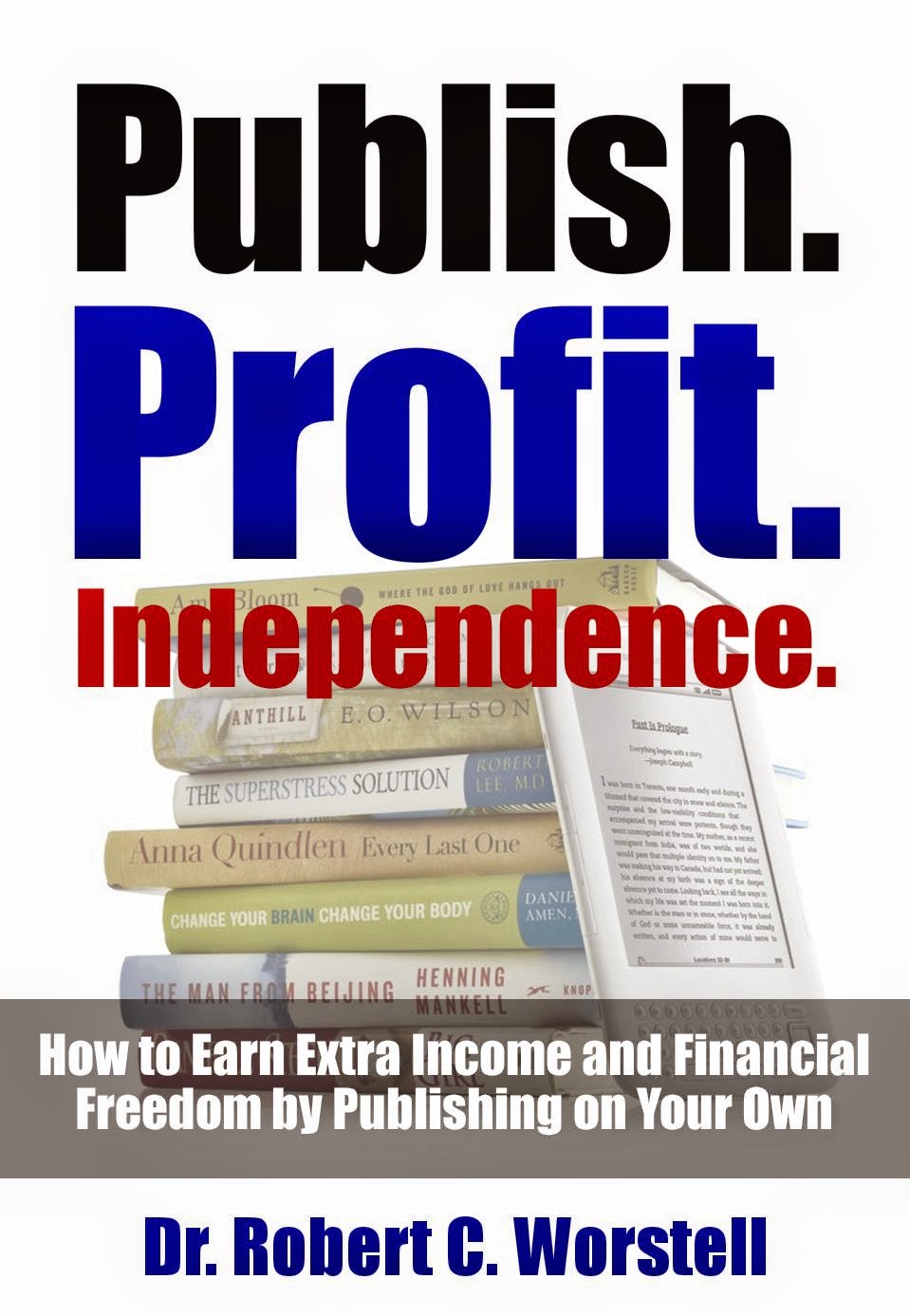
Sorry I didn't give you exact steps last time. (Of course, you can get this from my books, "Just Publish!" [ebook] and "Publish. Profit. Independence." [ebook | tradepaperback])

Here's the simple logic of it... 

The strategy:
  • Build a big backbench of titles, 
  • Publish these to as many eyeballs as possible. 
  • Encourage search engines hock your books for you.
Most authors make their big bucks from creating books for a certain niche in a series. This was the real secret behind (the over-hyped) John Locke and Amanda Hocking, as well as the perennial Stephen King.

These all write to a specific niche and for that particular audience.

You can do the same thing with Public Domain books, even PLR.

The problem with writing original fiction is that it takes a damned long time - like maybe 2 or 3 books a year. So you have to keep your day job meanwhile. Hocking is a hit now in her 20's, but she started in high school. Stephen King only wrote weekends until he could get enough books selling so that he could go full time. (Years and years.) Locke took about 7 years, and profited from loopholes in Amazon's system at the time (you can't even use his cheat-system anymore.)

The other point, particularly in non-fiction, is that there are a lot of great books out there which are poorly marketing and mostly out of print. Where these fall in to the public domain, where they are picked up and re-published, even if the quality is decent, the marketing usually sucks. (Just check out the public domain covers at Amazon for a hint.)

You can take any pre-1923 book and republish it as public domain and profit from any sales from there on out. About 94% of the books published between 1923 and 1964 were never renewed or never registered, so can be sleuthed out (see link) to see if they are public domain.

PLR is similar. No, you can't publish PLR on Amazon. But iTunes, Google Play/Books, Nook, and Kobo will take them as ebooks. And if you publish as hardcopy, they are accepted anywhere.

How to build your PD or PLR publishing empire

Know this, it's both easier and harder than it used to be. I got started by shoving a great deal of works up as a test through Lulu and they ported them to iTunes and Nook for me. They won't do that anymore. You simply have to port them all yourself. Google allows a mass upload, but Kobo is still an individual book-by-book publishing scene.

Using Calibre, you can pretty simply create and edit any ebook. LibreOffice will help convert it to a print version for hardcopies. Lulu will publish just about anything you want to publish, they just won't distribute it. See my two books above (and this blog) to get all the details of it. Calibre improves almost weekly, so it's a great tool that has continual updates.

1. Find your passion, find your niche.

This isn't get rich quick. You are going to be at this for awhile. Publishing is the simple part. And it will pay for the marketing you need to do to leverage your sales into something sustainable.

You have to be fascinated by the subject and interested in finding new things about it, as well as talking to anyone who will listen - and that is really all that marketing is, if you think it through.

So narrow down your passion and find a niche in that passion where people will pay good money to listen to you. Searching on Amazon or Google Shopping is a good start. There's a lot said about too narrow or too broad niches - so study up on this.

2. Get a series of books on the subject which are public domain and/or PLR.

PLR is mostly about Internet Marketing, but there are some great books out there on other topics. Frequently, you'll find a series of articles about a topic. These can be edited into a book (which is where most of the PLR ebooks out there started.) The great value to PLR is that someone has already done the research for you - you just have to re-write it into something useful. Most of PLR has already been published somewhere. I pushed several dozen books up on the main distributors as a test, and they've been selling like most books - a few sell regularly, and some every now and then. None are great hits - but they haven't actually been marketed, either.

Public domain is even easier to find. Start looking at the original publishing date and you can find some great ones. But just because a book has been registered, it doesn't mean the original wasn't already public domain. I found one recently which had it's copyright renewed in 1943, but it's original published date was prior to 1923. 

A point here - make sure you are working with original text. Many public domain books have been edited and additional, newer data has been added. That new data is under copyright, but not the original. (See this discussion at Public Domain Sherpa.)


2a. Make sure they are public domain. 


3. Get a batch of these and convert them into all possible formats.

Told you it wasn't get rich quick. You are going to have to know how to edit, some spelling, and grammar. You're going to have to know how to make great covers, or pay someone to do it. You are going to have to know how to write great copy for the descriptions. (Suggested here is to learn from Eugene Schwartz.)

Note: you want landing pages linked into the ebook versions - even if you don't flesh out those pages right away. People will want to find more books by that author/publisher. You probably want to start a blog or have a website - it's own topic of discussion.


4. Port these books to all possible distributors.

Lulu (get your free isbn's without Amazon discrimination), Google Play/Books, iTunes (needs a MAC), Nook, Kobo. 


5. Additional marketing: 


6. Now, take your best book in this series (the one you can talk the most about) and make it your representative.

  • Discount the price everywhere - not free, but very low. This is your loss-leader.
  • You want to take each chapter and create an ecourse out of it. 
  • Then you set up an opt-in form for an autoresponder (Mail Chimp is free for the first few hundred subscribers) to enable people to give you their email addresses.
  • Blog about all these books in the series so you have landing pages for each book
  • Then set up some hidden pages on your blog/site which have direct links to discount books on Lulu.
  • Promote these special offers to your list as exclusive specials. Note: set these up so you make some money on each one, but they are obvious values.
  • Create videos for each lesson and get these posted on YouTube and Flickr, as well as DailyMotion, etc.

7. For any new book, set up pre-release prices and do proper releases to your mailing list for new books coming out. 

This is the Amazon Instant Bestseller Tactic. If you can get enough people to buy them at a low price, then leave nice reviews, you will rocket your book up Amazon's algorithms and get more sales. If your book is in a particularly narrow niche, you'll rise to their "bestseller" status - but that takes more homework, again - see my earlier books above.

Then if you leave the Amazon link embedded in all your Pinterest, Flickr, and video posts (as well as your blogs) then the returning link-love will also help your standings on Amazon. 

Meanwhile, your Lulu sales, as well as your other distributors' ebook sales will pay for your other marketing expenses. 


8. From there...

  • All your books can have special releases on their own. Each re-release can become an "Amazon bestseller."
  • You can create binders/collections of the books and release them on their own.
  • You can get someone to create an audiobook of your bestseller, and get this on Audible (sold on Amazon)
  • You should create hardcopy versions for each ebook as you go - but the bestselling books should be put out into "Global Distribution" via Lulu, so can be sold everywhere. (You can even get a hardback version created via Lulu - which is even better revenue.)
  • More ecourses.
  • Create digital product versions which can be sold via affiliate sites (such as JVZoo) and iAmplify. Your readers can get paid for promoting your book - and should.
  • Weekly blog posts with audio/video will improve the discovery potential for all these books.
(Note: there may be more money in selling courses based on the book, especially in non-fiction. Check out Udemy.)

9. Then: rinse, repeat.

Once you've done all you can for this niche set of books - and carefully published and marketed any additional books you've now found for this series - then you can do the market research to find a new niche (or related one) and do the above steps on it.

Note: now you have a mailing list, so your work can become even more popular and profitable.

The trick is to work our your own assembly line and market as you go. Stick to a simple batch of books before you start any further ones. Believe me, there's a great deal of satisfaction helping people find a long-dead author's work. But you want to get paid for your efforts. So marketing the books is key - and it's what sets you apart from all the other PD re-publishers.


Why this works - Long Tail Marketing.

Mainly because it's self-supporting. Publishing books and doing the minimal marketing of an attractive cover and enticing description will leverage on the existing brand of any author and their books. Distributing as ebooks to every possible ebook distributor should (depending on how profitable the niche/author is) give you regular income to reward you for your work.

When you use modern online marketing efforts to ensure the search engines know about your books, then you fuel a greater fire under that book - which improves discovery. Up to a few years ago, you couldn't find these books other than in a used-book store. And in many cases, this is still true on Amazon.

By creating ebook versions, you are now introducing a new version so people can see if they like it. Then you also offer the hardcopy version, which most people still prefer.

It's all Long Tail Marketing - meaning there are a lot of people out there for any particular niche. You don't have to have bestsellers all the time, but they are nice. The trick is to give your niche some great value continually. As you add on more and related niches, you build a set of inter-referring web pages and marketing content ("if you liked this book/author/publisher, then you may also like...")

This can leverage you into being able to publish full time - when your book sales approach approximately twice what you make at your day job. (That means it will pay for your monthly bills and Social Security, etc.)

For now, just have fun with this.