Showing posts with label paperback. Show all posts

Wednesday, February 17, 2016

Beyond the Ebook: More, Bigger, Self-Publishing Profits


Paperbacks on CS, Lulu - Beyond the Ebook: More, Bigger, Self-Publishing Profits

Missed Profits Following Conventional Wisdom

Conventional Wisdom (which is usually 95% wrong) says you should be happy with your ebooks and how they are selling.
The problem with that logic is that the biggest sellers aren't doing that.
The biggest sellers make more income from hardcopy sales than ebooks. Traditional publishers know this, even though they count on just a handful of authors to cover all their costs.
The self-publisher can create their own publishing empire if they do two things:
1) Create a deep backbench of books.
2) Get their book in front of as many eyeballs as possible.
The first is obvious. All the top-selling authors routinely bring out new titles and make sure their earlier titles continue to be available.
The second means book discovery, sure. It also means having your titles in all possible formats - ebook, paperback, hardback, audio, even video. Because no two readers read the same way. No two readers prefer the same format. Most prefer combinations of these formats. Amazon knows this, and they bought Audible (audiobooks) and CreateSpace (paperbacks) to take advantage of that exact fact.
My own research pointed this out over 6 months ago. I've published hundreds of books as tests (and gotten my financial freedom by doing this.) Of these roughly a quarter routinely sell as ebooks. I've got a much smaller set of these which have also been published as paperbacks (and even fewer as hardbacks.) When I crunched the numbers recently for 6 months worth of sales, it confirmed what I suspected:
  • 12% of my books were producing 25% of my income.
  • 92 of my ebooks were producing the income of 34 paperbacks.
Meaning for all the work I put into ebooks, that if I would take the ebooks which were selling and turn them into paperbacks, I could possibly triple my income.

Why are paperbacks more profitable than ebooks?

You have to understand the elephant-in-the-room explanation first.
The vast bulk of the press on self-publishing is devoted to becoming a successful ebook author. Let's face it, there are some good reasons for this:
  • They are easier to produce.
  • They are fast to get published after the writing is done.
  • 70% royalties are easy to understand.
  • Paperback publishing has been hard for a number of reasons:
  • It's expensive to print books.
  • Traditional publishers want only proven authors whose books will recoup the investment of big (or small) print runs.
  • Every step of the distribution chain has to be paid, leaving little to pay authors.
  • Hardback publishing is even more expensive and so, has less rewards.
Traditional publishing used to have the model of building demand with the expensive hardbacks, then leveraging the profits by producing the lower-cost paperbacks and ebooks.
Self-publishing, as I covered above, uses the reverse model for the same reasons. People who really like the ebook will want the paperback, and if they read it often enough, will want the more durable hardback. (Of course, you better be writing classics for this to take place...)

My studies showed loopholes and potholes.

I took a couple of days to digest Penguin's 1700 classic books to get a set of books as a base. I wound up with about 80, quitting when I started running into their really long tail which never sell even one per day.
I used CreateSpace's royalty estimator to see if they could be self-published and be profitable. See: https://www.createspace.com/Products/Book/#content6 (The trick is to set the price a .01 and it will tell you the estimated costs to produce the book.)
Then I published 8 books on CS to see what would happen.
The first hidden factor I ran into what that there was a gap between what CS said it would cost and what they actually charge.
Any book 108 pages or less is said to cost $2.15. It actually will wind up costing $3.59 Working with these, it wound up being exactly 1.67 difference between estimated and actual.
The second hidden factor was to find that the price minus the actual cost, plus your royalty left a big amount of change on the table. In fact, Amazon only gives you 40% of that possible royalty.
Just the way things are.
Do these steps with a spreadsheet to do your number crunching:
  • Take your page count.
  • Find the estimated CS cost.
  • Multiply times 1.67
  • Pick your royalty and divide by .4
  • Add that royalty to your actual costs and you'll see the price you'll need to charge.
Run through a few scenarios and you may have some different ideas about what you can make off paperbacks. A nice introduction to this reality, perhaps.
What you'll find is that your costs will tend to raise dramatically according page count. What I found in these books is that they actually cease to become profitable for self-publishing much above 250 pages if you have to depend on the prices traditional publishing sets for those page-counts.
This is because longer traditional press runs make bigger books more profitable, and there POD can't compete. Smaller books have a bigger expense on binding per book, for instance. This is probably why any CS POD books at 108 pages or below cost "the same" in order to keep the business running profitably.

What about Lulu POD?

The biggest problem Lulu has is that they aren't owned by Amazon. CS is internally integrated and so can produce more cheaply. Amazon can also change their prices more easily. Books that are over-priced or under-priced can be adjusted for the best income for Amazon.
When Lulu prints a book, they have to mark it up by 50 - 55 percent in order to cover their distribution partners - who insist on being able to discount any book by 40%. Or that's what I've been able to find out.
When the price/cost of a book goes up $1, Lulu has to raise it by $1.50 or so in order to stay in the distribution game.
(Lulu also has some fudge-factors in their pricing. I took 10 books I'd published as hardcopy there and ran them through a spreadsheet. Most of their added costs were explained as above, although there are some small factors - about 1.4% - that varied according to page count.)
Lulu overall is higher quality than CS, but that doesn't matter. On Amazon, a CS-published book (same author/title) will seem to get preference over a book published outside. Lulu is always higher priced, and has to be searched for in the "other formats and versions" link.
During the last couple of weeks before Christmas, non-CS titles will become temporarily "out of stock" even though there are plenty on hand. The obvious explanation is that there are lags on getting it from the external publishers warehouses to Amazons, so their guaranteed delivery wouldn't be possible. CS is completely integrated with distributed printing (that apparently matches the Amazon warehouse locations) so this isn't a problem. Mostly, that depends on how many units are sold for any given title. Those which sell less than one a week might do fine with a single book on Amazon's warehouse shelves.
The trick is when you try to get a CS book into other independent bookstores. There are a significant percentage which won't take a CS (read: Amazon) published book.
You'll get sales via Ingram of Lulu books where you won't be able to get your CS version sold. Tim Ferriss ran into this when his CS-printed book wasn't accepted by Barnes and Noble - so he marketed it via BitTorrent. Had he known the above, he could have had an easier time of it.
Recommended distribution is then to publish on both at the same time. Use CS for only Amazon-internal editions. Use Lulu for all your "expanded reach" distribution. Of course, there are exceptions. And we all could use more studies than just what I found. These are rough workouts. There are far greater publishing wonks out there than I.
This article simply gives you some tools to work more profitably with.

No real competition...

A key point to know is that there really isn't competition. Amazon knows this with their "also-bought" recommendations. People who buy one book will probably buy more like it. You just must be more creative in your marketing than other authors in your genre.
Be more creative in
  • Covers
  • Descriptions
  • Audience Experience
Never try to compete on price. Your titles aren't commodities. They never have been, never will be.
There is a very funny strategy you can try. I recommend publishing on Lulu in every format you can.
That said, you also publish to Amazon with CS.
So: set your Lulu book price at what the market will support. Then: increase your CS royalty so that price is close to your Lulu book. You'll get higher royalties out of your CS version and benefit by the "competition" between them.

There is an apparent sweet spot in page count.

Because Lulu has to increase by $1.55 every time the costs go up a dollar, above a certain page-count that price becomes hard to support.
I mentioned earlier how the longer print runs affect pricing. This seems to start kicking in at about a 250 page-count. CS books tend to return much less royalties for the same title-author combination. Lulu seems to cut out at under 200 pages. Lulu and CS compare best together at under 100 pages.
If you take the standard of 250 words on a page, a 200-page book is about 50K words, a 100-page book about 25K words. A 100-page book is also in Kindle Short Reads category.
This means that your investment with National Novel Writing Month would pay off if you completed one title, sent it to editing and then started in on your next novelette. Write five days a week, publish two. You'd end up with 10-12 books which would sit on the top end of Kindle "short reads" and also have profitable CS/Lulu paperbacks.

What is a typical workflow to achieve Multiple Eyeballs?

For publishing itself, you want the fewest possible interfaces. Every time you have to shift gears, it's a drain on your resources. So you want to work in batches as you can. Note the terms below:
  • "title" is your particular word-collection, usually referred to as a "book".
  • "version" is the format, such as ebook, paperback, hardback.
These are the simplest ways to keep everything straight, since all of these are "books."
Again, store all your data in Calibre and keep this safeguarded. Back everything up.
We assume you have the front cover ready.
Also, a 4000-character description (about 3800, actually) formatted with Amazon-acceptable HTML. You'll edit this down for Lulu meta data. Store this in Calibre. (It can even become your backcover text for the paperback.)
1. Start with Lulu. Figuring that you're publishing original material, get each title through Lulu on it's own, in every version. I generate the epub version through Calibre itself, and then tweak it to fit on Lulu. But you can also upload your Word doc/LibreOffice .odt file and let them convert it for you. (Hint: try to keep all images out of it.)
2. Have Lulu distribute your ebook to Kobo and Nook, not Amazon or iTunes (we'll be back for them later.) If you have Lulu create your epub, download it and store in Calibre.
Start now to collect the ISBN's as you publish each version. Calibre gives you hints how to store these.
3. Generate the PDF in LibreOffice as it's simple, accurate, and accepted by Lulu and everywhere else. (I understand Word still doesn't do this natively.)
4. Then submit that PDF to Lulu for both trade paperback and trade hardback versions. Make sure your PDF is formatted for 6"x9" - use their templates until you can evolve your own. (LibreOffice has a nice feature where you can import styles from a document you've used before.)
5. Get the proof into your Lulu shopping cart for the paperback as required. Wait until you have all your title-versions published before you finish your order to save on shipping. (Find their specials by clicking on the Logo on the home page.) Don't order the hardback proof yet.
6. Download the pdf Lulu creates for your cover and edit out their isbn in GIMP (or similar.) This is your cover for CS, unless you want to change it. (Note: you can generate several versions at the cover stage, or go back and create a new one. Simply upload new cover art and let them generate a new PDF you can download right at that point. Perfect time to send out PDF covers to your fans to see which one they like the most...)
7. Get all your titles through Lulu first. You'll use the Calibre and Lulu interfaces for all titles and all their versions.
8. Then publish your trade paperback versions on CS. They have a truly lousy cover creator. Simply upload that cover-pdf you set up above - the one from the Lulu trade paperback - and let them install their ISBN on it. (No, they won't accept a Lulu isbn. But you can buy your own and use it.)
CS takes about 12 hours or so to approve each version. Note that they give you both the full ISBN and also the shorter IBSN-10. That last one is used for Amazon to create their links. (http://amazon.com/dp/[isbn10goeshere])
9. Proof your CS version, once it's approved. You'll be able to do this online unless you have an error in the file.
10. Then submit your titles to Kindle.
11. Then submit your titles to iTunes.
Again, we are using one interface at a time as much as possible. Calibre is the key interface. And I'd suggest dual monitors if you can. Much easier.
12. When the paperback proofs come in, approve them and order the hardback proofs. As above, you have to decide whether a hardback is even needed on the market. For each of your top-selling books, it's probably a good idea. Otherwise, you're probably better off selling them from your own Lulu storefront, where you can set the discount (up to 60%). These are great for offering special editions to your list for "just a dollar above cost."
- - - -
Yes, it's that simple to increase your book publishing income. You no longer have to settle for smaller income from just ebooks.
Good luck with this!


Sign up for pre-release specials
and free samples, too...
Click here or type into your browser:


Thursday, January 21, 2016

How to Write Less and Publish More - A Rich Adventure

kindle short reads - write less profit more


Can you actually write less and profit more?

Introduction

Deep in the heart of the ever-growing Amazon Kindle jungle, there's a profitable under-served market which is not easily discovered. It sits in a clearing by itself, much like a massive stone temple rising above the forest. A temple with some gold-filled rooms.
Just my kind of area to explore. I've long been in favor of "find where everyone is going and go the opposite way." So this makes a lot of sense. And any adventure is always welcome.
We saw this expedition hinted at by Steve Scott with his non-fiction habits books. But he never really explored the opportunities this area has. In re-tracing Scott's own path, it showed me the turns he didn't take.
That inspired me to start my own journey around two months ago. I'm currently publishing an average of one short read ebook per week. And the results are promising, as the Christmas sales influence fades.
This path struck my fancy, as it told more about how to really use short reads as a business strategy. How to cement those 6-figures that Scott started having. What I've discovered accelerates that progress, perhaps even creating your 7-figure income.
(BTW, in Scott's recent videos, he points out that his income is still dwindling, down from a high of around $400K annually to an average of "just" $250K per year. While this is still great, it also shows that he's left tons of money on the table.)
One of the more profitable avenues is content writing as part of business publishing. A lot of businesses are getting into content marketing these days, but don't have a lot of thick texts sitting around waiting to be turned into Kindle ebooks.
What they do have is lots of shorter material which would be perfect how-to non fiction books about their particular industry. If these could also be quickly turned into small books to hand out at trade shows and by their sales people, a business could get a real marketing advantage over any competition.
And such production can be fast. The book you are reading (although more work could have been done in editing, to be sure) was created and published into four widely-distributed formats in only three days, at a cost of sweat-equity only. Imagine what could be done for your next product release...
This isn't just for fiction writers. It's for everyone with a message to get out.
So let's get started...

The Secret Map to Short Read Riches

There's a growing group of readers which Amazon has been catering to with their Kindle Short Reads. Shaw describes them like this:
"Introducing Coffee Break Readers
"There’s a new generation of readers.
"People who will download and read lots of books. They only have so much time and they want their fill of excitement in that limited time.
"We call them the CBR’s - the coffee break readers.
They’re not just people who have never read longer books before... They’re anyone who has limited time to read for whatever reason.
"These people aren't stuck into a certain author, it's more like the certain type of entertainment they want: short stories which they can read in their available time."
That idea opened my eyes quite a bit.
The price range for these CBR books is the same as Scott's .99 and 2.99, plus the 3.99 or 4.99 boxed sets.
But the trick is that you're having to write a lot less and profiting more from each bit you do write.
When we last left our hero, Scott seemed to be getting into longer and longer books as he went, but this is the reverse of where you want to go. You'll see shortly that this is more of a pioneer territory with a lot less competition and few tools to use to find your way. What Scott should have been doing is to figure out how to multiply his success in related genres, and stick to the short reads and box sets.
It's really all the "deep backbench" principle again. The more books you have up there, the more they can be recommended, the more chances you have to uncovered your room of gold.

Less Competition, More Profits

The great part is that this is still mostly virgin wilderness. Go look over Amazon short reads and you'll see there is a lot less competition, as the books are split up by length as well as genre. People can have 15, 30, 45, 60, and 90-minute reads. Your book still shows up in the regular categories. but the CBR's will specifically hunt up your books according to the time they have to read. So it's easier for them to find your books.
Basically, Amazon counts every 250 words as a page. Except for special instances, they generally only accept 2500-word books these days. So Shaw's chart shows the reading time category you'll fall into with your short reads, depending on word count.
Let's look at that competition you won't have:
For instance:
Literature & Fiction -
Kindle Books: 1,352,061
Kindle Short Reads (30 min): 48,093
Business & Money -
Kindle Books: 249,574
Kindle Short Reads (30 min): 15,937
Which arena would you like to compete in?
Another point is that there's higher turnover. People are basically consuming books like tasty snacks. This then leverages your writing far beyond anything we've seen before. They aren't looking for books they can read a bit of each day (munching all week long) but rather 5-10 books they can finish each week.
For the money they'd spend buying a traditionally-published big name author's ebook, they can buy just as much reading material for less than half - and it's all designed to be read in those tiny snippets of time they have available.
Shaw says that the bulk of the reads in this category are actually indie authors, so this means the Big 5 publishing houses won't compete with their big promotion budgets in this arena.
Shaw points out, as I did earlier, that you can publish a single 80,000-word book and take a month writing it. (And another month editing and proofing it.)
Or – write eight 10,000-word books and publish every two weeks. (One for writing at 2,000 per day - 10,000 words - and the next week for editing/proofing.)
In two months, the first author has one book, which will sell for 4.99 or so.
The second author has 8 books that can sell at 2.99.
The second author has roughly twice the royalties coming in, plus:
  • the ability to get readers as email subscribers also from each additional book (with a Lead Magnet at both beginning and end)
  • the ability to be searched for 56 keywords and in 16 categories, instead of just 7 keywords and 2 categories.
  • the greater number of his books and his more frequent releases prompt Amazon to recommend these other titles.
  • and you're making income while you are writing.
  • then creating a box set of these (or even a couple) just adds to the above.
In this hypothetical match-up, you have the same amount of words for each author, a tiny bit more overhead in producing covers and descriptions for short reads each ebook, plus building that box set. But then the box set allows a longer-read customer to consume the full novel.
As a sidebar, the box set looks to be a better bargain than the 80,000-word single book. Would you rather buy a collection of 8 books for 4.99 or a single book for 4.99?
This starts to point out the factors in Steve Scott's system that he was missing.
What you've also done is to create 9 books (8 singles, plus the box set) in the same amount of time as the other author, but on your author page, you've got 9 books they can check out (and buy). And that's two months' work. The audience then doesn't question if you're a one-shot wonder, but will know by the end of just two months that you're a serious contender.
The other successes I've studied spent an entire year or more creating their bigger novels in order to have 5 or 6 books available (which was Scott's average, by the way, and he was doing short books.)
Again, you can have 9 books published in just two months. Instant legitimacy, with less competition.
Setting the first ebook as perma-free is an even better option. Plus, you can give it away from your site (and also from your box set look-inside) to get their email address. You aren't giving away your first 80,000-word book (which freaks most beginning authors out) but only 1/8th of your total work.
(One tip here is to tell them in the first line of each single book's description that a box set is also available.)
Shaw talks quite a bit about Kindle Unlimited here, but I still hold that you're throwing away income if you're not offering your works for sale everywhere possible (see Addendum.) The places you should publish in my opinion are Amazon, Itunes, and Lulu (both as an aggregator and hardcopy publisher.) This gives you the minimal interfaces to deal with.

Hook, Line, Sinker and the Lead Magnet

This is a tip Shaw gives which I've seen nowhere else: Inside your first book, it says: "Get the next book in this series!" and has a link which goes to a landing page opt-in. When they sign up, they go to a thank you page, which lists all the rest of the books in that series, as well as your other series - and they can buy each of the books through that page, directly from Amazon. That "thank you page" also has the free samples linked.
To my mind, this would be where you also give a link to sell a bundle for each ebook. It would include the PDF, epub, and mobi files as a download from your own site.
(Shaw does give a way you can help them side-load it with their Kindle email link. This builds relationship.)
Now, note that you will be building your ARC (Advance Review Copy) subscribers with your email. This segments part of them into a special list so you can sent preview copies in exchange for a review on Amazon. This is the key way to make "bestsellers" on Amazon. I did find a slightly better take on this from Mark Dawson, who has:
a) Tell your ARC about the release date.
b) Tell the rest of your list the day after, letting them know the price is going up.
c) Tell your entire list the day the price is going up.
d) Then (my addition) post to your blog/podcast with the release data and use IFTTT to syndicate it everywhere.
e) You'd then run Facebook ads about the book, particularly if it were a boxed set, where the increased book income would pay for those ads. ($4.99 or so.)
What that does, per Dawson, is to give you immediate reviews and sales, then gets continuing sales afterwards, as Amazon will promote books which are new and continuing to sell well.

Additional Short Read Marketing Tactics

Shaw comes up with some marvelous tactics with short reads, which are just as applicable to bigger books, but not as quickly or easily done.

1) Collaborations with pen names

This tactic can be used for testing other genres, but is also essentially brand-extension. Your first pen name is known for a certain sub-genre, then you write a book in a related sub-genre adding a co-author that is actually just another pen name. It's not hard to see the cross-selling aspects of this. You can now can have several authors with their own list segment, for each sub-genre you want to write in. Shaw explains this in more detail in his course.
Your emails then come from an embracive source (like your publishing house or an "imprint" of it) which then lists the books by each author for each sub-genre. Each author could have their own special offer going.
As you segment off your hotter audience (more opens, clickthroughs) then you can give them polls, in order to narrow down what they like most and so create a better experience for them.

2) Collaborations with other (real) authors

If you have a box set with books by several of your pen names, you can then offer other authors in those sub-genres a chance to get into that box set. Since you have several "authors" already, it's a no-brainer. And that new author then emails his list about that box set. This is an old standby of affiliate marketing. It builds both your lists.

3) Cloning

For fiction short reads this is a viable option. Taking your book outline (Shaw has a course on this as well on Udemy) you then get some ghostwriters to produce another book with the same basic plot. You then publish this under that pen name. Similar cover, similar title, cloned. It works because people want more of what they love.

4) Reverse Launch

You can also release the box set first, and then offer them your first book in that series as a sample - and put that in your "Look Inside". Then you can go ahead and release the other books on a schedule, getting people to opt-in to your list to get the "early bird discount" as each new single is released.

Non-Fiction and Public Domain Publishing

Amazon is seeming to do all they can to discourage any more PD from showing up there. I got reminded this last week as I had a special report (quick read) that wound up in their very slow PD queue because of its title alone. My other books were getting approved in about 12 hours, so having to spend 5 days getting a book out of that queue back into draft was really annoying.
So I will definitely avoid this route just because it slows the speed of publishing. This also points out that they are primarily working with a database of titles (and maybe authors) as opposed to any search of submitted content (which might occur later, once it gets kicked into human hands, but that's doubtful.)
Another cross-over point is improving your writing. Writing a good non-fiction book has a great deal to do with how they write good fiction. Mainly things like having a good hook, and using emotional descriptions.
Plus, fiction is more profitable in general than non-fiction. People like to be entertained and to escape. If you can bring these same writing styles into non-fiction, then you have a popular hit.
All short-reads do is to make your books more consumable, which is the same point of learning fiction-writing techniques.
The benefit of this strategy is to enable you to get more leverage out of the same amount of content that you're going to create anyway.
Pen names to fill space in a magazine is nothing new. Prolific authors have often resorted to these for any number of reasons. Being able to cross-connect these authors and their readers gives you new opportunities for income.
I just wanted to tell you all about these, as this is a breakthrough down this line of short reads.
And authors with existing books - depending on how they are written - can break up their books into a serial format and do this same thing. The first short-read excerpt becomes a sample, then release the other chapters along this same line. Gladwell's Tipping Point could have been released like this, if that were a publishing option at the time. Remember, it has to read like a serial to be successful along this line.

Leveraging Your Resources

Further, I still recommend coming out with both paperback and hardback editions to get the most out of your title. And don't forget your audio book.
Some tips came to light this last Christmas season. It turns out that Amazon will stop ordering books for certain titles if they come from Lulu or other publishers, but not their own CreateSpace (CS). You can see how this makes sense from a shipping point, but you'll also see that you just lost sales for the couple of weeks just before Chrismas. That means all the last-minute shoppers can't get your books if you don't publish to CS.
CS doesn't do hardbacks. Period. They do a lot of different cut sizes in paperback that Lulu doesn't, however. So you can make a pocketbook paperback version on CS, and a trade paperback version on Lulu, as well as a trade hardback version (both casewrap and dust-jacketed.)
Note, Amazon will show your CS version on the front page, and your Lulu version will have to be searched for. Having your expanded reach on Lulu gets your book into the other distributors with higher royalties and no Amazon stigma attached.
The general theory is this:
  • You have titles which are selling as ebooks and long enough to make at least a 32-page book in print, or about 8,000 words.)
  • Paperback version on CS, just to Amazon.
  • Paperback version from Lulu with their expanded reach. - Casewrap hardback from Lulu with expanded reach.
  • "Deluxe" dust jacketed version at a much higher price.
Work your books backwards in order of sales so that improved title sales pays for the proofing costs of the hardcopies.

Editing itself can give you an audio book.

You have four drafts of your book. First is your rough draft. Second is cleaning up your errors and inserting links, plus general formatting. Third is reading the book out-loud and correcting anything you find. At this point, you record everything you read out loud, with attention to reading the final version into your recording. You then send off that 3rd draft to a proofer. Meanwhile, you edit your recording into shape as an audio book (or as a podcast.)
For instance. this podcast transcript is now over 4000 words in print. So it would qualify as a 30 minute quick read, but isn't big enough to print by itself. (I could add material to the end pulled from my other books, and also put in ads to buy my other books on Amazon.)
So we will probably use this as a test of this whole publishing scene
While your recording can become your audio book, it's also a podcast. Including that link into your ebook then gives you added value. I also include the link into the PDF version at the bottom as a footer. So when you submit the PDF to make your hardcopy version, they can always type that link into their browser and get the podcast.
Of course, that sends them to your podcast where they get your ads, and another way to get them into your membership/mailing list.

Quick Reads Other Than Amazon

Of course this strategy works everywhere else, too. Your ebook are the same. You don't have the "Look Inside" but all the ebook distributors enable previews - just make sure the PDF you upload has links to where you want readers to go. I'm also a fan of uploading the entire PDF, as it builds trust and encourages them to get a version they can read more easily on their smart phone. (But I do format my PDFs for 6"x9" as these are more readable on smaller screens.)

Podcasts and Keeping Updated

One final thought is to tell you to follow my Authorpreneur Flipboard magazine to keep up with all that I'm finding daily on book publishing and content creation.
I may work this up into publishing this as a weekly digest at some point, but don't know when. Let me know by return email or comment on this episode if you think that's something you could use.
This podcast was started as another self-publishing test, and it's succeeded far beyond what I expected. However, I have no need to simply work at finding more stuff to talk about just to have a podcast. I do like to share breakthroughs. But at this point, I've covered the bulk of the basics and have no reason to do like Steve Scott and others who are now trying to profit off selling courses to their list.
This is mainly as that market is so saturated, it's not funny. The ebook market is, frankly, glutted. The how-to books market for new authors is worse. Amazon is more the new-author graveyard than ever before. Most of this is because authors are following the followers rather than reaching for the top 5%. That's where the real creative energy is. Market leaders are constantly creating. And that's what makes them leaders. Everyone who tries to just copy what someone else is doing is just another also-ran.
Scott was onto something with his short reads. But he's another follower, even though well-paid. Essentially, he's always been an affiliate marketer. And that's always a follow-the-follower scene. It shows in his latest course in how to write and market books.
Any breakthrough in leveraging Amazon is in finding what are still niche areas, such as short-reads. Amazon is a complete pain to work with, as they nickel-and-dime your royalty income every chance they get. But they can be leveraged and they can be used to build your own list.
You do need your own site, and you should be able to sell your own books from your own site. I should finally have my own ecommerce site up later this month. You already see my membership site is up as a bare-bones operation, but I'm adding content to this each week. And my email lists are slowly building as I go.
Here's the minimum basics in sequence for a successful author, outside of their ability to write:
1) an autoresponder service
2) a domain of your own
3) a membership on that domain
4) your own hosted bookstore
Everything else is getting your books also offered by the main distributors so you can use those distributors to build your email subscriber lists.
If you don't have these four points above in, then you are just asking to be booted off Amazon at some point and left with no income, nothing.
The secret to profits from Amazon is to leverage their ebook sales into hardcopy sales, which are not subject to their money-grubbing policies on royalties. The real market for fiction and non-fiction, especially PD and PLR books, is in POD versions, not ebooks.
And those few comments above sum up my entire accumulated wisdom on selling books profitably. The rest is technical how-to which can be dug up just about anywhere (although the books I've already published in this area have been described as a Gold Mine with all those technical nuggets you can find inside.) My earlier books were to help anyone start with just the computer and Internet connection they already have, plus a common sense approach mostly lacking in the bulk of the other books in this area.
But I have no reason to revisit my own books. This scene is constantly shifting and evolving. I'd be forever just keeping these updated.
I'm not going to promise you that my podcast will continue. If I don't find anything really interesting, or a breakthrough, then it's just another day in the life. Frankly, these two Shaw courses on Udemy have inspired a completely new approach for me - but there's no reason to repeat what he's already written, other than this review.
I'm also studying Mark Dawson's course on Facebook advertising, but this is a back-up to having a lot of books out there already. Your sequence would be to study the two Shaw courses and then Dawson's free videos (until his pricey FB ad course opens up once again.) If you only have a couple of nickels to invest, then get my cheaper ebooks and work on building your backlist. Once the money starts dribbling in, then invest in the above - AFTER you have your own list, domain, membership, and ecommerce set up (which can be built with just Blogger, PayPal, and MailChimp - all free to start with.)
Again, before you start publishing your books (you should always be writing, every single day) get your basics in above. Then expand your training with Shaw and Dawson. If you go back through my blog posts, I've given you other downloads to study through. All free.
Your main focus is to thoroughly study and test everything for yourself, then throw away everything that doesn't work for you. Especially what I've told you. No prophet is sacrosanct, regardless of how many followers they have or how much money they make.
Your life is your own. Live it to the fullest you can. Enjoy every moment. Listen only to those who have escaped that bucket of crabs where everyone else lives.
While I'm way behind and underneath my production goals these days, I still work to see how I can help you with whatever you need. Your input helps and inspires me. Email me directly or leave a comment.
And, thanks for being there.
- - - -

 Would you like related books in this series?

Free ebooks (as well as links to paid versions) available in the no-charge membership.

Thursday, August 7, 2014

The "News" in Self-Publishing is all DIY, not "done-for-you".

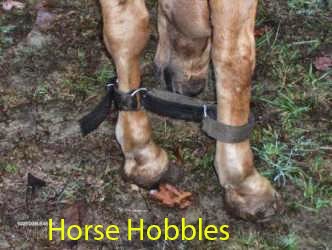
Self-Publishing is the new model which is far more profitable than traditional-publishing lock-step hobbles.


Quit being hobbled by traditional publishing - self-publish your books and earn more income.
(photo: eXtensionHorses)
Hobbles are used on animals to keep them from wandering. They're usually put on the (front) feet and are uncomfortable.

The model for traditional (legacy) publishing similarly limited the independent author, in many ways.

Because books had to be printed before they were sold, and the only profit was in huge print-runs, only a few books could be selected which would seem to be able to pay back at least the cost of printing. Statistically, about 1 in 10 of the publisher's selections would pay enough to cover the losses from the other 9, plus make a profit.

With Print-on-demand, and ebooks, this model is completely reversed.

Now the market decides what is a good book and what will sell.

I recently ran into this with Amazon. My trade paperback version of an ebook I edited together was being promoted as "only 5 left!" But what they didn't say is that they'd order another short run if they needed, and a larger run if it sold well. Because the book was only printed on demand, not in advance.

eBooks, of course, aren't "printed" at all - so it's a classic way to earn income without having to spend much more than a few hours of your own time.

This is what is the new "news" in publishing. When you get a traditional publisher, you are just tapping into their ability to set up a better cover, better proofing, and whatever existing distribution lines they have, plus promotion deals they might set up.

Frankly, the argument by Mark Coker of Smashwords and Marc Lefebvre of Kobo is that the indie authors do better pricing low and simply cranking out volumes of books in series (plus writing really long books.)

The surprising news is that the ebook distributors will take care of marketing your book with their own on-site algorithms. Each new book has it's limited time in the sun - after that, it's sales will depend on how well it was written.

Series of works come in when the reader wants to hear more about this character's adventures. Non-fiction books can be bundles of several different authors (such as the Masters of Marketing Secrets series - about copywriting.)

Let the market decide - don't second-guess.

One fact which showed up in the recent studies about copywriting is the common "conventional wisdom" that you can "create demand" for any product or service. Gene Schwartz was clearest in his "Breakthrough Advertising" (long out of print) where he stated that desires are eternal - you simply align your product to the most powerful desire you can. There is no such thing as creating demand. Demand already exists, depending on the maturity of the market and how many also-rans are present (ie. "competition").

Your marketing (copywriting) only aligns the perception of your product with an existing desire (demand). The better your copywriting/marketing, the greater the "discovery" - and the better your product, the more a user/viewer/consumer will tell others how it helped them.

That is really the core of how marketing works.

Is there any real need for traditional publishing any more?

Probably not.

I'd say that there is a need for marketers who can create campaigns to launch new books and re-launch book series, that these small companies could provide the service of publishing an author's books for them.

Those companies don't even have to be physically located in New York on Publishing Row.  They don't even have to be located in a city or town. They don't need much for office space (a spare bedroom or den will do.)

They do have to build an online presence, but their growth is more dependent on their quality of delivery than any physical condition of existence.

Practically, a well-run publishing business can run rings around any of the "Big Five" publishers, because they simply don't have the overhead.

How and Where to Publish as a SOHO Publisher

(Small Office/Home Office - as different from Lower Manhattan)

Rather than where you're located (physical), it's where you publish (virtual.)

The "Amazon-centric" strategy is using their KDP-exclusivity, backed by a hardcopy version (which would be Create-Space) and an Audible (exclusive) audiobook - all having the same cover. This is putting all your eggs in one basket, but has the highest profits possible (providing you can get your book to sell at all.)

The "Everywhere else, also" strategy says to get your ebook up on iTunes, Nook, GooglePlay, and Kobo, while matching this with a Lulu paperback and an Audible audiobook. You are still on Amazon, just not exclusively.

The "And Then Some" strategy has you branching out with bundles which you offer on affiliate sales platforms. In this case, you offer digital versions of the entire series, plus audiobooks (you are now not exclusively on Audible, or create a different version just for these.) This also has you getting accepted by OverDrive as part of their Content Reserve program - which can push you into libraries and other retailers where Amazon might not be as welcome.

Note: the SOHO publisher, with dozens, if not hundreds of titles to publish, can leverage the OverDrive connection - which a self-published indie author and his handful of titles cannot. The SOHO publisher also has the economies of scale - having already published that many titles, it's relatively easy to publish the half-dozen books an indie author will bring their way.

How a SOHO publisher is profitable

In any Gold Rush, the people who made the most money sold picks, shovels, pans, and jeans to the miners. You have to realize in publishing that most books don't sell well, if at all. Period. Striking a good vein is more than luck - it's hard work that the author has to do in honing his craft. Good books continue to sell well. Poor books fill up Amazon's database.

For a writer to make it with original works, they have to stick at writing for a few years, and concentrate on simply creating the best possible books they can. Amanda Hocking became a million-selling (and millionaire) author after she had already written 17 books and started self-publishing. Once she got popular, she got a traditional publishing contract which allowed her to concentrate on just writing.

What an indie author needs is someone who will publish their books for them, and take a piece of the royalties for a certain time period (say, 5 years) with a low up-front fee to cover costs. The SOHO publisher then is interested in the various marketing campaigns (again, mostly online) which will then get that book to sell.

The author doesn't have to worry about sales. They need to concentrate on their day job to pay their bills, while spending all their free time in writing and improving their craft.  They hire the SOHO publisher to do the background work of publishing (proofing, cover, pushing to distributors, creating bundles) so that author can simply concentrate on the two things they need to worry about.

Once their books start to sell enough to support their lifestyle, then the author can renegotiate the contract for royalties. Where the SOHO publisher is doing their job well, they'll keep that contract going and be able to concentrate more effort into expanding whatever marketing they have going to further increase sales. Win for the indie author, win for the indie SOHO publisher.

The SOHO publisher is affordable, as they take a much smaller percentage of royalties than the traditional publishers have. The author would end up with probably about 50% - 60%, compared to about 25-30% in the traditional-legacy publishing scene.

What's missing is the advance on royalty. (Like the $15 million Hillary just got which the publisher is preparing to write off as a loss.)

The indie author pays someone else to do the self-publishing work he/she could be doing on their own. Getting a SOHO publisher to take that drudgery off their lines would enable them to concentrate just on writing.

How this is better than Vanity Publishing

The old days (and these slick operators still exist) had the author shelling out a small fortune and would wind up with a stack of books delivered to their home which they then had to sell. Thoreau did this, but also Wil Wheaton caught this bug.

The modern days says you go virtual. Get print-on-demand for your print books, while the ebook is out there forever. Invest the profits from these into producing an audiobook and leverage your original content into greater income.

The author in this case pays someone to line up proofing and cover artwork, then to do the detailed work of publishing to the various online distributors. As well, the author doesn't have to learn how to publish their own book, or how to market online - but simply can keep to the craft and job of writing.

Vanity publishing gave you a stack of books. SOHO publishing gives the author more freedom to be creative.

The vanity publisher was paid for short-run publishing. The SOHO publisher is paid for the effectiveness of knowing and executing online marketing.

Of the two, the SOHO publisher has less overhead and so a much greater opportunity for profit. Entry-level costs are much lower than any vanity press, but with the right contract, will then be able to ensure future profits while being creative in a different realm of marketing.

Your choice, as always. Stay hobbled or get free to roam.

How to get more information

I operate my own home-publishing business. I don't take new clients currently. But you can learn how to publish on your own (or learn what your publisher should know) with my book:

Publish. Profit. Independence.

Home pubilshing business guide - earn extra income and financial freedom by publishing on your own.
Available everywhere fine books are sold. ( More links coming soon...)

And do sign up on the upper right so you get the latest installments of this blog.