Showing posts with label OverDrive. Show all posts

Wednesday, May 13, 2015

How to Market Test Your eBook - Before You Port to Amazon

How to Market Test Your eBook - Before You Port to Amazon
(Photo: Wikipedia)

Test Your Book's Sales Ability Before a Big Amazon Release

Simple really: sell everywhere else first.

Why?

Because Amazon is known as the new book graveyard. That is why there are so many, many books written about how to "crack" Amazon, how to "make it big" on Amazon", "make a killing", all that sort of stuff.

Amazon, simply, is the 900lb. gorilla in the room, but also a complete pain in the butt.

Reason? It's weird algorithms which only push up regularly-selling books. You get one chance - for about 2 weeks - to prove that your book will sell well for them. And then, it's back to the bottom of the heap for you.

The source of this (besides their ruthless capitalism) is that funny review system they have. Not only do people not rely on reviews (according to survey) - also, Amazon's reviews are bought, sold, faked, padded, and gimmicked to be unreliable. They even pay people to do reviews - and those people have such a volume that they don't have time to read the books they are talking about.

That said, Amazon is where you can make the most income if you are able to make a hit.

The simple strategy to this is to
  • publish on all other platforms first and 
  • let it sit for a couple of months 
  • (while you work on your release campaign, book trailer, launch emails, etc.)

The story behind this approach

I've written and/or edited and (re)published a couple hundred books now. None of them were marketed. Some have never sold, some have sold occasionally, some sell regularly, and a very small handful are bestsellers.

Note: without any marketing.

Mostly public domain (PD) and PLR books, plus a handful of my own.

The reason for no marketing was simple - I got fascinating with all the great books out there which didn't even have good covers and descriptions, but sold enough for me to do this full time. That small number of books is paying all my bills and then some.

I've been testing ebooks and book publishing for a decade now.

When I decided to leverage that book income into a higher range, I realized that I would have to crack Amazon.

PD books on Amazon are very discriminated against. Because they only want unique books, not more of the same. Anywhere else who will publish PD books will generally accept anything you throw up there.

Getting PD books into Amazon proved to be very time-consuming affair, with additional research far beyond the time you already spend editing, creating a fascinating cover, working up an enticing description, and cross-checking to make sure the book is actually in the public domain.

The extra research is to find out what your competition within Amazon actually is. Then you have to re-edit the book to add in additional material so it will be "(annotated)" or "(illustrated)" enough to pass their sentries. (Even then, I've had books simply be "unavailable for sale" after they were first approved.)

Amazon, for public domain editions, is an additional "special" edition you publish after you've already gotten it everywhere else.

Books that sell well, sell everywhere well.

The funny part is that the books which (finallly) sell well on Amazon are already selling everywhere else first.

What is making these books sell? Titles, covers, descriptions, price.

No where else uses reviews. Amazon already bought up Goodreads, which is the only other place that sponsors reviews on their sites. (Unless you count Amazon's Shelfari, which is a "red-headed stepchild" these days.)

Every book that sold well, sold well everywhere. Some books sold well on certain platforms and not others. But a bestseller on one was generally a bestseller on all of them.

Reversely, why put a lot of work into marketing a book into all the various places you have to log into and create content for - if that book will never really take off?

That means: Publish on iTunes, Nook, Google Play/Books, and Kobo before you approach Amazon.

What you can do meanwhile is to set up all the marketing you need to do (which is a long list of steps, plus lots of content ported from your book.)

It can take you a few weeks or a couple of months to get all those sites lined up for your "big release" event. Meanwhile, you can be test-selling your book, and tweaking things with your audience.

At that point, start ramping up a release schedule and either pull the other versions or increase their prices drastically, so that your Amazon release is a spectacular bargain.


This approach is really good if you don't have a mailing list of trusted loyal fans who are beta-reviewers and helpful tipsters.

How about the Amazon Bestseller Tactic?

Where you simply get a few hundred people on your list who go out and buy your book the day it's released on Amazon and instantly post rave 4- and 5-star reviews...

Well, Amazon got wise to that one - you need to have regular and ongoing sales after those first two weeks. Otherwise, you get demoted for another book to take your place. And while your book now has reviews, so will get promoted as an "also-bought" more than a book with no reviews - Amazon is interested in leveraging their own sales, too.

Which is why they are the new author's graveyard. Your book is consigned to the very long tail of sales - which means you'd better have your next book ready to be published if you're going to make any living with original fiction or non-fiction books.

Getting your list to buy and recommend your book to others (particularly if you can sign them up as affiliates to get paid for pitching your book - not Amazon Associates, which pay piddly if at all.)

That's a complete different tangent to go down, not for this blog post.

Your Amazon Release Strategy For Success:

  1. Publish everywhere else first and watch the sales. 
  2. Then either 1) work up your marketing material, or 2) write the next book in that series.
  3. When you a) have a sales record established (and meanwhile have been building up your mailing list) and b) have your marketing materials figured out, and c) have a series of books to release over a period of time (like every two weeks on Amazon)
  4. Now you can launch your set on Amazon over a couple of months.

What will happen is that people will go back and buy the earlier ones in the series because they liked the last ones - and Amazon will push your earlier ones as an "also-bought" or "by this author" or "related books" when people look for your later ones.

Using your loyal list in this, with some nice email enticements, they'll then buy and review all your new books in that series, which will set the stage for new readers (who discover your book in other ways) to then go and buy the earlier books in that series - a rising tide that floats all old boats as well as new ones.

The secret is to test on other retailers as well as your own list.

And no, this isn't set in stone. You can probably see lots of variations in this already.

Just wanted to get this out to you so you could earn more income from your writing.

- - - -

Stay tuned for more ways to sell your book online (and make more money) - subscribe by email or newsletter today!

Thursday, February 5, 2015

How to Throw Away Perfectly Good Marketing and Make No Sales

What to Do When You Have Legacy Brand Mojo

(Artwork: Wacky stuff)
Public Domain publishing is profitable if 1) you take advantage of the brand awareness that already exists, and 2) you don't do something stupid to make it undiscoverable.

Right now, I'm just finishing up the publishing of a long out-of-print classic which has an underground following and tons of positive reviews.

The funny stuff is that someone took great pains to find and market the earliest version of it he could find, only to throw it away by changing both title and author.

Oh yes, he did.

It meant that anyone looking for the book couldn't find it. And while he was trying to sell it as an "exclusive" PDF, it was showing up all over the place in various formats under it's new name. (But not, interestingly, under it's original title.)

I researched the book and of course found that this 1957 book had never been renewed under that name or title. So I went ahead and converted one of the free Internet versions and published it. Not too surprisingly, I started getting sales.

Then that guy contacted me, all pissed off. When we talked it through, (and I explained how public domain copyrights worked) he said I just needed to change the title, as it was "his". So he told me the original title - and sure enough, it also had never been renewed. Also, there were a lot of positive reviews about the book with the actual author's name.

Regardless of the fact that this guy was missing out on all these sales by getting it up and on the major ebook distributors lines, the point that he was marketing it as an unknown book by an unknown author put it back at square one for marketing.

Of course, he also edited this new title all through the book, so I had to re-edit the book and get a book sent to me by the library system so I could check to see what other changes had been made. Unfortunately, all I could get what a 3rd edition - but the editing which had been done wasn't major and showed me what had to be fixed. Mostly a search-and-replace job.

The lesson is this: these authors spent a lot of time and effort (and many times lots of advertising dollars) getting that book known and sold (or their publisher did.) That is branding.

When you simply put a new cover and updated description on a book, making it available in all sorts of modern versions (ebook, tradepaperback, even hardback) - then it takes off based on the original popularity.

When you change the title and change the authors name, just take yourself out back and give yourself a swift kick in the posterior - or shins. Because that's less painful than shooting yourself in the foot - which is what you just accomplished.

Build your new marketing on the existing brand awareness of both the book and the author. Amazon and Google look up these reviews and put them with your book if you use the original book's title.  So this puts you miles ahead.

And makes your book start selling right off.

What helped me get ebook sales even with the new title and author? The preview - because when they started reading it, the author's original great content still sold them.

Now that I have everything back to where it started, I figure it should really take off. I might even have another Amazon bestseller on my hands - simply because this is one of those public domain books which has no competition from the other PD resellers.

That other guy could have done this.

Now you can.


Wednesday, February 4, 2015

Why Aren't Authors Happy Publishing Their Book?

Most authors don't make a lot of money from publishing...

(Photo: Diana Brown)

...and what they don't know is killing them.


I've done my own study of DBW's author survey. In addition to their earlier year's surveys, this also adds to the Taleist survey which got such headlines in 2012.

Here's the link to compare the DBW results yourself: Survey Results

(Note: I'm no fan of DBW's writing in general. They are too literary in style, meaning that their sentences are too long. Their words are too big. So they don't make sense quickly as you're reading.)

Here's my take:
1. Over 3,000 people answered the 2014 DBW survey, with over 75% of them having successfully published.

2. Over 53% have a manuscript completed (although this question was missed by 75% of those surveyed.

3. 71.8% were self-published, 28.9% got an advance (traditionally published.) 24.8% got no advance, and split royalties with the publisher.
4. Over 50% published their first book since 2012. 15.7% first published 2003 or earlier.

5. 97.9% have another book they want to publish.

6. Over 53.5% would publish either traditionally or self-publish, although they have preferences. 23.9 only want to self-publish; 14.4% only want to traditionally publish.

7.  Reasons for publishing:
  • Most important - Publish a book that people will buy, to build my career as a book writer.
  • Moderately important - to get validation for my work, to see my book in a bookstore.
  • Least important - to share my expertise, to get prestige.

8. Time devoted to writing - 10-14 hours per week (17.4%), followed by 20-24 hours per week (16.6%)

9. Time devoted to related activities (such as marketing) - 10-14 hours per week (17.6%), followed by 7-9 hours/week.

10. Income from writing books (pre-tax): $0-$499 42.9%

11. Satisfied with this? 31.4% are neither satisfied nor dissatisfied, but 51.6% are slightly or very dissatisfied.

12. Primary source of income? No - 78.3%

13. Do you earn income from other writing-related activities? No - 73.5%

14. Approximate pre-tax income from these other activities? $0-$3,000 - 31.4% (note: 75.7% ignored this question.)

What's the takeaway? 

  • Writers publish wherever they can, and don't make a living at this - or even enough to cover their expenses. They publish to get a book out there, hoping to make a career at this, or even just sell a book at all.
  • Writing is a hobby, not a profession - they still have their day jobs.
  • Writers don't effectively get any marketing done (or their books would sell better).
  • And they aren't happy about it.

DBW took the traditional publisher's view on this, which isn't useful to authors - it's second-guessing. (And shows how embedded they are with the Big Publishers.)

What this survey really says is that there is a market out there to publish books for authors, splitting the royalties for doing the work. Most authors don't know how to do their marketing, but spend most of their free time writing.

Only 5% paid someone to publish their book for them, but over 70% published it themselves. Adding the self-publishing industry leaders (the distributors who all take a percentage of the royalties and usually charge nothing) brings this up to 96.6%. (Note: questions were multiple choice, apparently.)

Vanity publishing (paying someone else to publish your book, royalty-sharing or not) is sucking bilge-water at getting any decent market share. No wonder their prices are so high.

Compared to Taleist


First off, they both are selling their survey results. (Thanks a lot.) I kept track of this DBW survey page when I got the result, and kept updating it.)

A good overview of Taleist survey showed:
  • 72% of respondents lived in the US (UK survey)...
  • One third work full time
  • Authors who got outside help earned 34% more on average
  • 53% self-published for the first time in 2011, with 20% having gotten a start in 2010
  • the 29% who went from a traditional publisher to self-publishing earned twice as much on their own as they did from their publisher
  • Only 60% of authors either could or would answer questions about their earnings
  • Average earning was $10k per author
  • Half of the authors earned under $500 in 2011 from their books
  • 10% of authors earned over 75% of the revenue
  • 97 authors indicated that they could live off of their ebook sales

Note that the Taleist survey only had 1007 respondents, compared to the nearly 3,000 at DBW's.

What's changed in 3 years? 

  • More authors have published their books than ever before. (1155 for 2012-2014, compared to 1092 up to that point.) 
  • Their income hasn't improved, even despite inflation, as around 46% still make $499 or less.
  • Those able to make a living were just under 10% in the Taleist survey, and 17.6% made more than median U.S. income in the DBW survey. (Note: the DBW respondents were more forthcoming about their income.)
  • The DBW top 3% made more than nearly 90% of the rest. These few made over 36% of the total income.
  • Average DBW income was over $22,000, over double the Taleist.
  • Like Taleist, the top DBW 10% made around 72% of the income.
While neither survey is "scientific", they both say a lot about the industry - and tell us that they are pretty close to the mark as they compare well.

Short summary: 

More  authors are making a living at writing and self-publishing than ever before, but...

Those writers who effectively learn both writing and marketing will earn their financial freedom - while everyone else has to be satisfied with a digital and/or print copy of their self-published book. 
And that's at least more rewarding than never even publishing that manuscript.

If they want to be truly happy, they'd better learn to both write and market better.

Friday, October 3, 2014

Are there Professional versus Amateur publishers?

(photo: BiggerPictureImages.com)

Is there a difference between "professional" and "amateur" publishers?


Technically, no. There seems to be a quality point, however. Even if that quality point is arbitrarily inflated.

Some people are just getting started in publishing, and others have been going for awhile. Some are using various "short-cuts" (such as Public Domain [PD] and Private License Rights [PLR] books) to get started, while others represent an assortment of live authors with original works that they've had to arduously bring up the line, no doubt having inherited that company from a time when all books were paper.

What brings this up is trying to get into OverDrive. I spent several hours over the course of months working to get into their scene, only to be summarily rejected after my hopes had been gotten up.
  • I first had to do an application. It took weeks to hear back. 
  • Then I had to submit an Excel file of all my books, along with 5 samples of my ebooks for quality review. That took several more weeks on their end. 
  • Then my un-named respondent said all I had to do was to again submit an application to that same webpage as I did first and then I'd be set to go. 
  • I also had to submit a W-9 for payment, agree with their terms, etc. It looked like I was finally approved. 
  • Then I was summarily rejected, saying that I'd be better off using one of their aggregators. Said it was due to the type of books I was publishing. (Again, the respondent was anonymous.)

Essentially, it seems someone's nose got out of shape. Arbitrary. They want quality over quantity. This isn't the case with the ebook sellers who have opened up to indie authors-as-publishers. They know that the market will choose the best. Always.

So someone at OverDrive is doing the same old scene of pre-winnowing the harvest in order to only have the "best" make it through. Sounds like the old traditional (money-losing) publishers.

Just don't expect anyone to take you "seriously" if you keep working to find the holes in the fence as an Indie author-publisher. Particularly the established players who are dealing with a different scale.

Oh - how does OverDrive make it's income? Giving only 50% commissions on the sale. Their terminology is that you're giving them your "wholesale" price. With their "down-nose" approach to indie publishers, they are just a bit better than Kobo, and worse payout than all but Amazon (for PD.) Even GooglePlay gives you 52%, the rest at 70%. But forcing you to use an aggregator means cutting another slice out of your profit. (This is the Smashwords/Lulu scene - or BookBaby, Author Services, etc.) Their point is that if you sell a lot higher priced goods, then everyone makes more money. (The main distributors shut off at $9.99 usually, and cut your commissions down to 35% when you go higher than that.)

Interestingly, the recent Hachette/Amazon feud showed that most of the bigger publishers are keeping their prices at around $15 or better - which is just cheaper than paperbacks. The public - and indie authors - know that there is no real cost to this type of publishing, so can and do keep costs down and work on volume and loyal readers.

The whole point to this is that it's possible to have an independent finance scene by simply finding books, converting them to multiple formats, and marketing them effectively. Something OverDrive is profiting from, but not very well (IMHO.)

My shorthanded review of OverDrive?  
  • Not worth the time and effort.  
  • Exaggerated quality hurdles to jump. 
They are stuck in the old school, and not ready for indie authors or publishers. Lump them in with traditional publishers. Because that is all they want - professional publishing houses and the status that goes with them. (Not us newbies. We'd rather talk to our real audience than spend time in corporate boardrooms with powerpoint slides and stiff suits.)

(And you have to know that I put off even applying to OverDrive initially until I had enough books to appear to be a bona-fide capital-"P" Publisher.)

The Old School of publishing says that Agents and Publishers know best - so only 3% of the authors ever get published. The New School says everyone can throw their hat into the ring - and the market will decide the real winners.

(That said, if Lulu ever gets onboard with them, I'll ship my original books over there, for sure. Just not worth my [or your] time chasing after them.)

- - - -

Am I offended or insulted? Not in the slightest. While I've been at this publishing for going on two years now, and have well over a dozen-dozen books published, it's not actually my main game. It is profitable, so it's worth the time I spend at it.

The people who run these massive publishing companies have huge overhead to support. Us indie authors and indie publishers can undercut them in price and appear to be everywhere at once with our marketing. We can move all over the place to make our income and have far more profit than they do.

We can more quickly find and supply a demand than they can, and then move onto the next area once they finally point their big machines to that area. They are mining huge areas for relatively little profit. Indie publishers can mine small areas for huge profit - as our overhead is nearly non-existent. In terms of dollar amounts, the big traditionalists make a lot more, but the indie author-publisher has a higher percentage of their income to spend or reinvest on their next title.

Again, the general theory of Indie publishing:
  1. Having a deep backbench of books
  2. Published to multiple eyeballs/distributors - in as many formats as possible
  3. Caring sharing to social networks (more on this later)
  4. Inviting email memberships to monetize.

- - - -

Next up for me? I've got another huge batch of books to publish (which is what I was working on without really waiting on OverDrive to pull-finger.)

After that - another batch as yet another test. Once I have this next dozen-dozen books up to the 6 main distributors, then it's time to get the rest of the backend created and running - which will be exciting and probably yield yet another how-to book.

- - - -

So what do we have here, with this SOHO publishing? A simple business plan which fills the old Internet Marketing gambit of a low-overhead business running on "autopilot." It's the "funded proposal" of the MLM world. And has its roots in a Kiyosaki/Eker passive income approach to personal fortune-building.

All we are doing here is to simply build the whole scene up using scale to leverage a wider set of niches than just one. Again, this is using ebooks to show where the actual demand is.

But that is what indie book publishing is all about - finding the loopholes, and selling books into this frontier of epub-versions which hasn't really been utilized by many in the PLR and PD fields.

PLR has been pitched to people to sell themselves off their own website - tediously building websites for niches and then driving business to them with ads. Very few are finding their way to the main distributors. It's a Wild West scene - where the guys who get there first stake out the claims.

PD books are either over-priced (if someone like a psychology book publisher thinks they have the market cornered on a rare book) or usually given away with no marketing, cover, or meta-data points covered. The market is mostly established already by author name and title. You're just goosing this along by picking winners and putting new versions out there which out-sell existing versions of the same books.

Shipping PLR and PD to the main distributors is a simple way of filling a need by getting the basic marketing done for these books. And it's both quick and inexpensive. Their authors don't care. It does runs against the grain of the traditionalists.

It's also a nice living. How to scale is in terms of using multiple distributors as leverage. Beyond that, you need to do external marketing (SEM is my approach - inexpensive except in terms of time) and then start moving clients onto a membership-and-affiliate backend system.

Book publishing can be actually part of a massive lead-generation funnel.

Of course, you're giving extra value at every step, so it's a completely valid approach.

- - - -


But that is leading into Marketing, which is yet another chapter in this journey-story. We'll get to it shortly, just stay tuned.

(Meaning, subscribe by email or RSS feed above right so you don't miss anything...)

Thursday, August 7, 2014

The "News" in Self-Publishing is all DIY, not "done-for-you".

Self-Publishing is the new model which is far more profitable than traditional-publishing lock-step hobbles.


Quit being hobbled by traditional publishing - self-publish your books and earn more income.
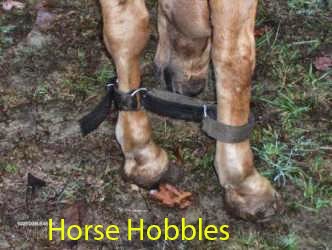
(photo: eXtensionHorses)
Hobbles are used on animals to keep them from wandering. They're usually put on the (front) feet and are uncomfortable.

The model for traditional (legacy) publishing similarly limited the independent author, in many ways.

Because books had to be printed before they were sold, and the only profit was in huge print-runs, only a few books could be selected which would seem to be able to pay back at least the cost of printing. Statistically, about 1 in 10 of the publisher's selections would pay enough to cover the losses from the other 9, plus make a profit.

With Print-on-demand, and ebooks, this model is completely reversed.

Now the market decides what is a good book and what will sell.

I recently ran into this with Amazon. My trade paperback version of an ebook I edited together was being promoted as "only 5 left!" But what they didn't say is that they'd order another short run if they needed, and a larger run if it sold well. Because the book was only printed on demand, not in advance.

eBooks, of course, aren't "printed" at all - so it's a classic way to earn income without having to spend much more than a few hours of your own time.

This is what is the new "news" in publishing. When you get a traditional publisher, you are just tapping into their ability to set up a better cover, better proofing, and whatever existing distribution lines they have, plus promotion deals they might set up.

Frankly, the argument by Mark Coker of Smashwords and Marc Lefebvre of Kobo is that the indie authors do better pricing low and simply cranking out volumes of books in series (plus writing really long books.)

The surprising news is that the ebook distributors will take care of marketing your book with their own on-site algorithms. Each new book has it's limited time in the sun - after that, it's sales will depend on how well it was written.

Series of works come in when the reader wants to hear more about this character's adventures. Non-fiction books can be bundles of several different authors (such as the Masters of Marketing Secrets series - about copywriting.)

Let the market decide - don't second-guess.

One fact which showed up in the recent studies about copywriting is the common "conventional wisdom" that you can "create demand" for any product or service. Gene Schwartz was clearest in his "Breakthrough Advertising" (long out of print) where he stated that desires are eternal - you simply align your product to the most powerful desire you can. There is no such thing as creating demand. Demand already exists, depending on the maturity of the market and how many also-rans are present (ie. "competition").

Your marketing (copywriting) only aligns the perception of your product with an existing desire (demand). The better your copywriting/marketing, the greater the "discovery" - and the better your product, the more a user/viewer/consumer will tell others how it helped them.

That is really the core of how marketing works.

Is there any real need for traditional publishing any more?

Probably not.

I'd say that there is a need for marketers who can create campaigns to launch new books and re-launch book series, that these small companies could provide the service of publishing an author's books for them.

Those companies don't even have to be physically located in New York on Publishing Row.  They don't even have to be located in a city or town. They don't need much for office space (a spare bedroom or den will do.)

They do have to build an online presence, but their growth is more dependent on their quality of delivery than any physical condition of existence.

Practically, a well-run publishing business can run rings around any of the "Big Five" publishers, because they simply don't have the overhead.

How and Where to Publish as a SOHO Publisher

(Small Office/Home Office - as different from Lower Manhattan)

Rather than where you're located (physical), it's where you publish (virtual.)

The "Amazon-centric" strategy is using their KDP-exclusivity, backed by a hardcopy version (which would be Create-Space) and an Audible (exclusive) audiobook - all having the same cover. This is putting all your eggs in one basket, but has the highest profits possible (providing you can get your book to sell at all.)

The "Everywhere else, also" strategy says to get your ebook up on iTunes, Nook, GooglePlay, and Kobo, while matching this with a Lulu paperback and an Audible audiobook. You are still on Amazon, just not exclusively.

The "And Then Some" strategy has you branching out with bundles which you offer on affiliate sales platforms. In this case, you offer digital versions of the entire series, plus audiobooks (you are now not exclusively on Audible, or create a different version just for these.) This also has you getting accepted by OverDrive as part of their Content Reserve program - which can push you into libraries and other retailers where Amazon might not be as welcome.

Note: the SOHO publisher, with dozens, if not hundreds of titles to publish, can leverage the OverDrive connection - which a self-published indie author and his handful of titles cannot. The SOHO publisher also has the economies of scale - having already published that many titles, it's relatively easy to publish the half-dozen books an indie author will bring their way.

How a SOHO publisher is profitable

In any Gold Rush, the people who made the most money sold picks, shovels, pans, and jeans to the miners. You have to realize in publishing that most books don't sell well, if at all. Period. Striking a good vein is more than luck - it's hard work that the author has to do in honing his craft. Good books continue to sell well. Poor books fill up Amazon's database.

For a writer to make it with original works, they have to stick at writing for a few years, and concentrate on simply creating the best possible books they can. Amanda Hocking became a million-selling (and millionaire) author after she had already written 17 books and started self-publishing. Once she got popular, she got a traditional publishing contract which allowed her to concentrate on just writing.

What an indie author needs is someone who will publish their books for them, and take a piece of the royalties for a certain time period (say, 5 years) with a low up-front fee to cover costs. The SOHO publisher then is interested in the various marketing campaigns (again, mostly online) which will then get that book to sell.

The author doesn't have to worry about sales. They need to concentrate on their day job to pay their bills, while spending all their free time in writing and improving their craft.  They hire the SOHO publisher to do the background work of publishing (proofing, cover, pushing to distributors, creating bundles) so that author can simply concentrate on the two things they need to worry about.

Once their books start to sell enough to support their lifestyle, then the author can renegotiate the contract for royalties. Where the SOHO publisher is doing their job well, they'll keep that contract going and be able to concentrate more effort into expanding whatever marketing they have going to further increase sales. Win for the indie author, win for the indie SOHO publisher.

The SOHO publisher is affordable, as they take a much smaller percentage of royalties than the traditional publishers have. The author would end up with probably about 50% - 60%, compared to about 25-30% in the traditional-legacy publishing scene.

What's missing is the advance on royalty. (Like the $15 million Hillary just got which the publisher is preparing to write off as a loss.)

The indie author pays someone else to do the self-publishing work he/she could be doing on their own. Getting a SOHO publisher to take that drudgery off their lines would enable them to concentrate just on writing.

How this is better than Vanity Publishing

The old days (and these slick operators still exist) had the author shelling out a small fortune and would wind up with a stack of books delivered to their home which they then had to sell. Thoreau did this, but also Wil Wheaton caught this bug.

The modern days says you go virtual. Get print-on-demand for your print books, while the ebook is out there forever. Invest the profits from these into producing an audiobook and leverage your original content into greater income.

The author in this case pays someone to line up proofing and cover artwork, then to do the detailed work of publishing to the various online distributors. As well, the author doesn't have to learn how to publish their own book, or how to market online - but simply can keep to the craft and job of writing.

Vanity publishing gave you a stack of books. SOHO publishing gives the author more freedom to be creative.

The vanity publisher was paid for short-run publishing. The SOHO publisher is paid for the effectiveness of knowing and executing online marketing.

Of the two, the SOHO publisher has less overhead and so a much greater opportunity for profit. Entry-level costs are much lower than any vanity press, but with the right contract, will then be able to ensure future profits while being creative in a different realm of marketing.

Your choice, as always. Stay hobbled or get free to roam.

How to get more information

I operate my own home-publishing business. I don't take new clients currently. But you can learn how to publish on your own (or learn what your publisher should know) with my book:

Publish. Profit. Independence.

Home pubilshing business guide - earn extra income and financial freedom by publishing on your own.
Available everywhere fine books are sold. ( More links coming soon...)

And do sign up on the upper right so you get the latest installments of this blog.

Saturday, July 5, 2014

Leanpub Shows Their TImidity - Accepts Original Works Only.

Leanpub does great at publishing original works - won't let you do public domain, through.
(Logo property of Leanpub as trademark.)

Just got suspended for "copyright violations" from Leanpub (on one account, anyway.)

Means they don't like public domain books.

Scratch them from anything except original books. Which means they're in the same category as Scribd and Smashwords: "Dead End - Avoid."

And I now have to review/delete a lot of stuff from the book I was writing on how to publish and make your financial freedom with a home-publishing business (- as it was centered on public domain and PLR works.)

The only real route for public domain self-publishing (not original works) is the old one:

1. Build your book in LibreOffice, create your ebook in Writer2Epub, then proof using Calibre's editor and Sigil.

2. Publish through Lulu first, but don't distribute there. Get the free ISBN. Publish your hardcopy books there, so they can be matched up on .

3. Using a MAC, publish directly to iTunes. With or without a MAC, publish to Nook, GooglePlay, Amazon, and Kobo.

4. Nobody else is really useful at this point. The rest simply avoid public domain books like they are plague-ridden.

5. iAmplify is probably the only way to "bundle" anything, and they don't do epubs, just PDF's. You have to have a video, which can be a book trailer. They have a decent affiliate program, but you can also use JVZoo or PayDotCom, even Clickbank for this.

Too bad Leanpub is being so conservative. Means I lost about a week trying to publish there as a test. Like many, they seem to consider that public domain books have a lot of risks connected with them.  (Too bad, though - Leanpub otherwise has a great model for self-publishing.)

So, screw Leanpub. Like Smashwords, Lulu, and Kobo - they are all too uptight about the public domain scene to spend (much) time on.

(Sigh.)

There are now just 5 distributors worth any investment of time. The rest, frankly, suck. (And Kobo working its way to that other list quickly...)

Of course, that's if you're trying to earn a living with public domain and PLR books. If you want to sit down and crank out tons of original content, just get them up on Leanpub, then push through Lulu as an aggregator. Lastly, port them to GooglePlay. Spend most of your time writing and sending emails to your audience.

For public domain, use Lulu only for the ISBN and hardcopy versions. Itunes, Nook, Amazon, GooglePlay, and Kobo are all published to directly. So there's only 6. (OverDrive hasn't answered back, so I presume they are not taking indie publisher submissions at this time.) Five main distributors, really.

Hope you have better results than I have. Wish I'd been suspended a few days ago instead of wasting a whole week. But that's life.

Tuesday, June 17, 2014

Summary of Getting Started: Lists and Sequences

Tying it all together in a neat package means giving you a shopping list of stuff to do in what order.

I. What distributors?

  1. Leanpub
  2. Lulu
  3. Google Play/Books
  4. iTunes
  5. Nook
  6. Amazon
  7. Kobo
  8. (OverDrive)

This sequence is to get all possible meta-data figured out, then storing this in Calibre locally so you can add it as you can. This is a posting sequence, not based on income levels.

I suggest porting to Lulu in order to get their free ISBN - which is handy for creating links and for search engines to find your books. None of these distributors require ISBN's to publish ebooks - they are necessary for print versions.

II. What to distribute?

Format: .epub

Everyone except Leanpub (for now) will take an epubchecked file. Leanpub will create an epubchecked file out of any HTML file, or directly entered Markdown. (You can export your LibreOffice or Word .doc into an HTML file and then import it into Leanpub.) Leanpub will also import your blog, just export it into a Blogger or Wordpress export XML file.

Most of the distributors will also take a .doc file - but whether that will process depends on many factors. An epubchecked .epub should pass everywhere.

The suggestion is to double-check everything in the most current version of Sigil. You can edit out Leanpub's branding with this, as well, in order to port it to other distributors.

III. How to create them?

Follow the guidelines and sequences laid out in "Just Publish! Ebook Creation for Indie Authors."

IV. Where to find original public domain works?

  • Gutenberg.org
  • Archive.org
  • any public domain work repository.

Any version of a public domain book is still copyright-free, except for any editorial changes made, which are the copyright of the editor. Extracting the original material gives you a version you can edit into your own derivative work. I've covered this earlier, but it's worth going over again - derivative works are not legally defensible if they are simply following the "two-step" of only adding a new introduction or preface. See Wikipedia entry on this.

There are also public domain images, video/movies, and audio files. 

V. Where to find PLR works?

Any site which sells or gives away these packages.

Note: the reason PLR is shunned on many sites is that they are pretty widely distributed and show up on many websites as content. But this material can usually be edited under most license agreements. PLR is different from MRR (Master Resale Rights.) In those cases, you aren't able to change the content, only resell the package. Be aware for packages which have simply been converted to MRR with no real changes to it except the license (perfectly legal.)  Doesn't mean you can't still get it as PLR somewhere else.

VI. What skills do you need?

  • A command of spelling and grammar for editing.
  • A review of good-quality ebooks to find what is considered standard and above-grade.
  • Graphics Art talent and training for covers.
  • A grasp of copywriting for writing descriptions.
Any and all of these can be out-sourced.

VII. What equipment is needed?

  • If you are using Lulu to do all your distribution (original and PLR works only) then you can use any machine that will connect to the Internet and create an .epub file.
  • If you are intent on re-publishing public domain books, then get a MAC and do everything from there.
The "old school" of a few years back said you were going to need a scanner and OCR program to convert old books to digital format. Mostly, this isn't needed these days. Some books still come only as images. And you can get free programs to OCR. On Windows (run in a virtual machine on Linux) I use a free program called TopOCR, which does a very good job.

I don't recommend going this route to begin with. It can take a week or more of editing to get a scanned book into shape. That same week could give you a dozen PLR or PD books published to all distributors and earning you income by the end of that month.

However, some of the best classic books in some genre's have never been converted and so there is no competition as an ebook. It it fits your niche exactly, then it may be a good investment. (I've also OCR'd and edited a book as a form of study, as well.)

VIII. What is the most efficient production workflow?

0) Determine the niche. Do complete market research on it.
1) Accumulate related books and convert to ebooks.
2) Build rudimentary websites.
3) Publish ebooks in batches along with landing pages as you go, updating links as publishing is complete. Build binders on Leanpub from these batches if appropriate.
4) Continue step 3 until you have a deep backbench.
5) Taking your bestsellers first, equip their websites with opt-in forms, free and paid membership areas, forum if applicable/possible.
6) Create video trailers and/or ecourse videos for each bestseller and post to several video sites with descriptions containing backlinks.
6a) You should also publish the hardcopy version(s) through Lulu to Amazon and the rest. (Also, take the bestsellers on Amazon and get audiobooks created for these - see the second workflow.)
7) Convert ecourse text lessons to PDF and post to doc-sharing sites with backlinks in the PDF and description
8) Post covers to image sites (Pinterest, Flickr) with backlinking descriptions.
9) Using a social syndication service, promote your landing pages on social media.
10) Build binders and packages for bestsellers and promote to relevant mailing lists.
11) Continue step 5 in order of individual booksales.
12) When you get to low-producing books, review their title, cover, description, and price. Tweak and resubmit as new book (don't take the old one down unless the title has remained exactly the same.) Note: Get new ISBN for new edition.
13) Create new binders and packages for bestsellers and do bonafide launches and re-launches on a periodic basis.

Note: Your income will boost based on launches and building your email list (which launches help.) Figure 6 launches a year once your backbench is built. One month to get everything in place, one week to run the launch, one week to recover personally, 1-2 weeks to analyze what you just did and see what could be improved for the next one. Plan your launches around major event timelines - December, Halloween, and other shopping events (these major marketing dates have long been established and can be researched online.)  Or you may find by statistics that hitting in between these will work best - or that utilizing major affiliates (and their mailing lists) will set your launch date for you.

Again: the concept is that your ebook publishing will make you financially free - while your paid memberships will get you as rich as you want.

VIX. What is the most profitable production workflow? (Untested.)

0) Determine your niche. Do complete market research on it.
1) Build your book in Leanpub and attract audience input from that niche.
2) Set up your website for the book series or batch.
3) Revise your book until your readers are ecstatic about it.
3a) Meanwhile, publish the paperback version via Lulu.
4) Post to the distributors with a pre-launch date, Amazon first. Update all links. Ensure Amazon links your paperback and ebook together.

5) Work out getting it posted to Goodreads, so reviews can accumulate.
6) Get your Leanpub audience to post reviews on Goodreads.
7) Create a launch with videos which coincides with release date on Amazon.
8) Set up opt-in forms, free and paid membership areas on your site.
9) Execute your launch.
10) Run analysis on performance metrics.
11) Take next book in your batch and run it through above.
12) Once your first batch/series is complete, do a launch for it's binder (create a single "boxed set" as an ebook for Amazon and others.)
12a) You can also do a launch for an Aubible audiobook version - which will boost sales of all three versions (four is you go ahead and publish the hardback, too.)
13) Expand your backbench with a new batch of books and run each book through the above.

Note: This builds with your launch as you build your audience and email list. Getting your list to buy your Amazon book and give it glowing reviews is the heart of the "bestsellers" there. Since Amazon can leverage income, this is the core of most "get rich quick with publishing" books out there, because it works if you already have the email list. The above assumes you have no real list to begin with.

Note 2: The rough formula is Leanpub + Goodreads + Amazon + Launches. The real money is made with paid memberships, which Amazon sends you traffic for. Any review on Goodreads shows up just about everywhere (Amazon owns it.) Reviews are what will kick in the algorithms on Amazon to get your book discovered. Only Amazon.

Note 3: This is untested by myself, not by others. Buy their ebooks on Amazon and you'll see they are telling about the same system. I went the harder route of building a deep backbench and getting sales across the board long before I had any bestseller on Amazon. Mainly because I consider their review system is false. It's long been gamed, and is constantly being revised by Amazon itself. (The first reviews on Amazon were created by paid staffers.) Meanwhile studies of reviews show people are using them less and less to make buying decisions. But they do get your book visible on Amazon, which will spike (not create) sales.

The above model mixes financial freedom with getting rich. If your books continue to sell well on Amazon, you're set. But as Warren Buffett quoted someone else, "You can keep all your eggs in one basket - just watch that basket very carefully."  So the emphasis is still on publishing to all possible distributors in addition to publishing to Amazon. No book will sell the same on any two distributors - they each have different audiences.

Note 4: iTunes and others have additional incentive tools to sell books on their individual platforms. These could be worth researching and incorporating into your launch - or running a separate launch, particularly if you sell more on iTunes for a given book than Amazon.